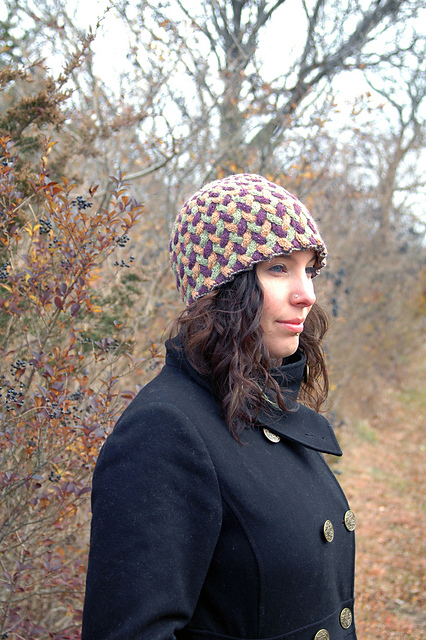
Showing posts with label 2011 knitting books. Show all posts

Monday, December 19, 2011

2011 Retrospective: Best Books of the Year

It's that time again: the end of the year, when I take a moment to look back over the past year in the dog-eat-dog world of yarn.  Let's start our retrospective with a look at some notable knitting books published in 2011.

We start off with Clara Parkes' excellent The Knitter's Book of Socks: The Yarn Lover's Ultimate Guide to Creating Socks That Fit Well, Feel Great, and Last a Lifetime (Potter Craft), the third in her "Knitter's Book" series. Clara does a great job explaining the technical requirements of a good sock yarn, then presents a beautiful selection of sock patterns from top designers, including Melissa Morgan-Oakes, Cat Bhordi and Ann Budd.


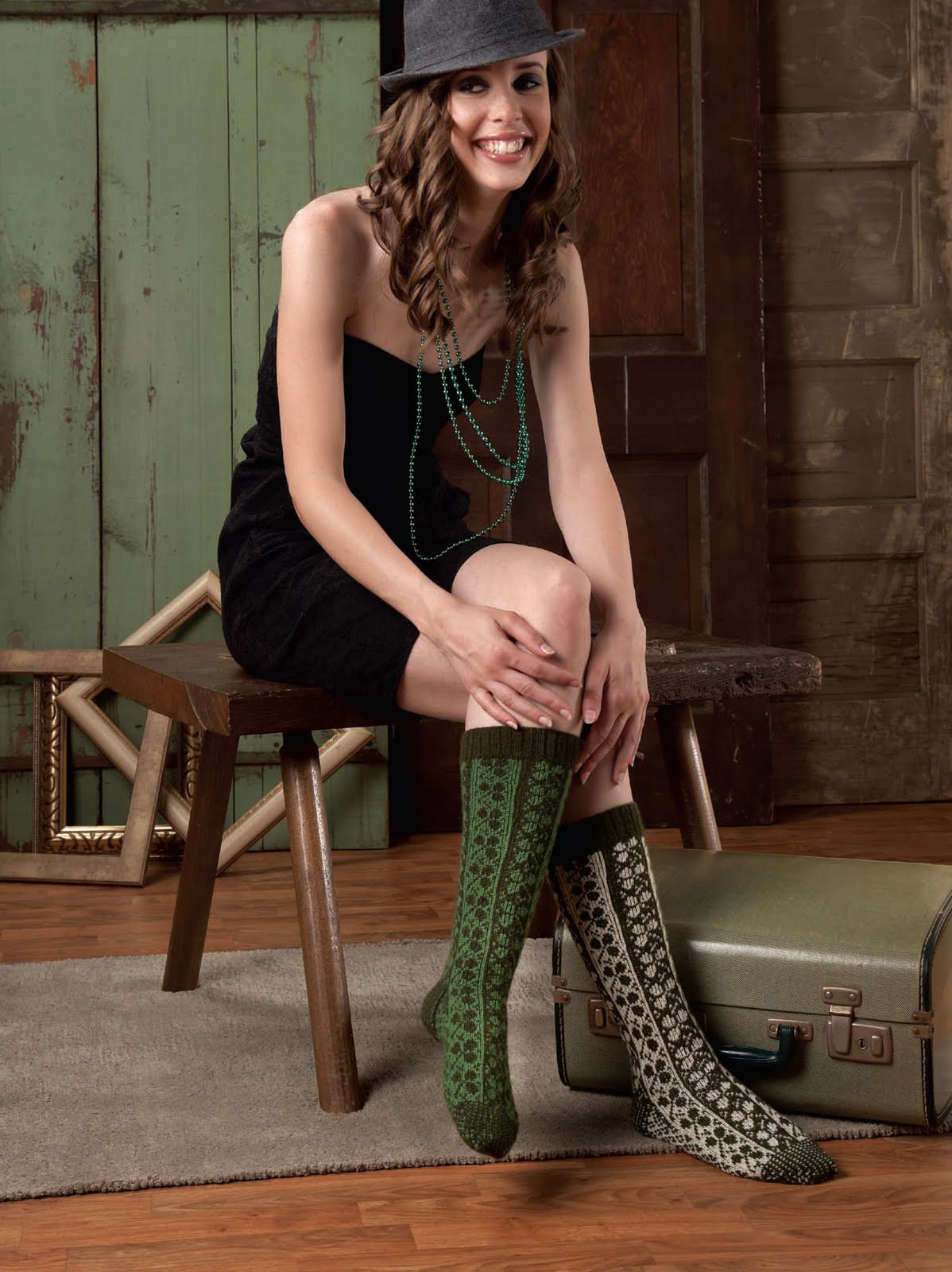
While we're on the topic of socks, Barb Brown's Knitting Knee-Highs: Sock Styles from Classic to Contemporary (Krause) presents a knockout selection of patterns for knee-highs (with pattern variations showing the socks in ankle- and/or crew-length, too).  Lots of beautiful stranded knitting, texture, cables, and lace make for a lovely collection for the sock-knitter. Sock knitters will also want to check out Ann Budd's Sock Knitting Master Class: Innovative Techniques + Patterns from Top Designers (Interweave).

Did someone say lace?  Three standout lace books made their debut this year, each with its own sensibility.  Wendy Johnson's Wendy Knits Lace: Essential Techniques and Patterns for Irresistible Everyday Lace (Potter Craft) presents clear technical instructions for the beginner, and a terrific selection of patterns using fingering-weight and heavier yarns.  The talented Teva Durham presented her own lace collection with a trendier edge; in  Loop-d-Loop Lace: More Than 30 Novel Lace Designs for Knitters (STC) she riffs on standard lace techniques and creates some really interesting and gorgeous garments.  I haven't seen The Haapsalu Scarf yet, but based on Siiri Reiman and Aime Edasi's previous book on Haapsalu shawls, I feel confident this one's just as good.


I'm a big fan of Connie Chang Chinchio, and her first book Textured Stitches: Knitted Sweaters and Accessories with Smart Details (Interweave) is hot off the presses. I like the way Connie combines classic, elegant silhouettes with interesting details, and you'll find some great, wearable and stylish choices here. Wendy Bernard's second book, Custom Knits 2: More Top-Down and Improvisational Techniques (STC), presents another good-looking collection of sweaters knit in the round from the top down, along with technical information to help adapt patterns for a more customized fit.


Noro fans, rejoice:  two gorgeous books devoted to all-Noro designs were published this year by Sixth and Spring.  Knit Noro: 30 Designs in Living Color contained a mix of items from sweaters to accessories, and  Knit Noro: Accessories: 30 Colorful Little Knits is devoted entirely to smaller items. Both contain terrific selections of patterns that make the most of Noro's self-striping and vivid color combinations, and both are elegant enough to serve as coffee table books.

It was a dream of Elizabeth Zimmerman's to publish a book devoted to garter stitch. Even though EZ is no longer with us, her daughter Meg Swanson was able to compile a selection of patterns in garter stitch from Elizabeth's notes.  Knit One Knit All (Schoolhouse Press) contains the kind of creative and fun projects that EZ is known for. Meg Swanson and Amy Detjen also have a book on stranded knitting that has just gone on sale, and although I haven't seen it yet, I expect it to also be a winner.

Knitters hungry for technical instruction had some great choices, including Extreme Double Knitting by Alasdair Post-Quinn (Cooperative Press), which explores in great detail the technique of double-knitting; Judy Becker's Beyond Toes: Knitting Adventures With Judy's Magic Cast-On uses Judy's Magic Cast-on as a jumping point for designs; and Mary Jane Mucklestone's 200 Fair Isle Motifs: A Knitter's Directory (Interweave), provides a comprehensive collection of traditional fair isle motifs. Back in print: Alice Starmore's Alice Starmore's Charts for Color Knitting: New and Expanded Edition (Dover).

For newer knitters, Melissa Morgan-Oakes' Teach Yourself Visually: Circular Knitting (Wiley) provides plenty of photographs and step-by-step instruction on how to knit tubes rather than flat pieces. Once you've been knitting for a while, it's easy to forget how confusing knitting in the round can seem to a newbie, so this book would be extremely helpful for a relatively new knitter.

Last but not least is Anna Hrachovec's Teeny-Tiny Mochimochi: More Than 40 Itty-Bitty Minis to Knit, Wear, and Give (Potter Craft), a whimsical collection of tiny little knitted objects -- everything from volcanoes to robots to armadillos.


With all the concern about the longevity of traditional publishing, it was good to see a strong crop of knitting books released during the past year (and I've only mentioned a handful of the ones that were publishedin 2011). I was happy to see that treasured old titles are being reprinted and in some cases updated (in addition to some of the Alice Starmore titles, look for Principles of Knitting by June Hemmons Hiatt in early 2012, and a revised edition of Folk Socks by Nancy Bush is expected out any minute now).  There seems to be a growing trend of creating knitting books tailored to a specific yarn, such as the Noro and Cascade books, and the renewed emphasis on techniques is also encouraging.

Next up: a look at yarns we said hello and good-bye to this year.....


Monday, December 12, 2011

No-Bull Book Review: Extreme Double-Knitting, by Alasdair Post-Quinn

As I have said before, one of the most exciting things that independent publishers can do is bring knitters books that mainstream publishers won't publish.  Publishing executives who aren't knitters might not recognize the appeal or importance of technical topics, or might believe that a specific subject won't generate enough sales to warrant the substantial investment that a book requires.  Ideally, smaller publishers can make a profit on books that don't sell as many copies or appeal to a particular niche of the market, and therefore bring overlooked topics into print.

Today's book review is an example of a very technical subject brought to us by independent publisher Cooperative Press. Alasdair Post-Quinn describes himself as "a 30-something computer technician in the Boston area" who spends "much of my spare time as a knitwear designer, focusing specifically on double-knitting."  For those of you who aren't familiar with the technique, double-knitting is a way to create a piece of knitted fabric that doesn't have a "wrong" side.  As Post-Quinn explains, "Until recently, a typical double-knit fabric was either tubular or two-colored with the opposite side showing a mirror image in opposite colors from the facing side. Over the past few years, people here and there have been pushing the boundaries of double-knitting to include more complex color and structure variations."  Enter Post-Quinn's book, Extreme Double-Knitting (Cooperative Press 2011; available for $29.95 through the link or as a PDF download for $16.95 via Ravelry).

In Extreme Double-Knitting, Post-Quinn presents a primer on double-knitting as well as a collection of patterns illustrating various double-knitting techniques.  What makes the book stand out is the depth in which Post-Quinn covers the technique of double-knitting, and the way in which he pushes the boundaries of what might seem to some to be a very narrowly-focused topic.  (In fact, I can't believe someone hasn't already used that irksome phrase:  "It's not your grandmother's double-knitting!")

Extreme Double-Knitting is a paperback, just under 200 pages, about 8.5 by 11 inches, and chock-full of photographs and charts.  There are 14 patterns, plus a few exercises included.  It's not a typical knitting pattern book, though, relying much more on technical instruction and skill-building.  Let's do a GKIYH walk-through.

The book begins with a two-page introduction, in which Post-Quinn distinguishes similar uses of the phrase double-knitting (he's not referring to DK-weight yarn, or knitting with 2 strands held together, or referring to typical stranded colorwork done with 2 shades of yarn, nor is he referring to tubular double-knitting).  He then addresses the question -- not an insignificant one, he acknowledges -- of why do double-knitting rather than knit two separate pieces and sew them together. Post-Quinn cites the way double-knit fabric contains 2 layers that are anchored together and don't bunch up; the way either side looks equally good; and the freedom of colorwork without stranding or twisting.

Chapter 1 begins with the basics of double-knitting: how the fabric is made, the importance of gauge; and why Post-Quinn continues to twist his stitches as he knits them. Chapter 2 gets the knitter going with a two-color cast-on, then shows how to double-knit both with and without twisting the stitches. Next up is double-knitting flat, with three methods of working edge stitches to keep them neat, and two methods of binding off.  After describing modifications necessary for double-knitting in the round, Post-Quinn covers adding a new skein of yarn and reading charts. Last up are two exercises to practice double-knitting, one flat and one in the round. This chapter contains three patterns: the Corvus Scarf, a long muffler with a crow motif:


Corvus Scarf

a baby blanket with a geometric pattern inspired by fractals,


Sierpinski

and a set of wristwarmers.


Wrist Chakras

Chapter 3 introduces shaping, walking the knitter through a variety of decreases and increases while double-knitting, including helpful close-up photos of what the increases and decreases look like, and hints for handling them in charts.  The patterns for this chapter include a brimmed cap:


Bratach


and two neckties.


Silk Road

Chapter 4 teaches the more advanced topic of knitting two different patterns in the same item, combining two charts into a single one for knitting. There's an exercise given for this technique, then two patterns:  a sign that reads "Open" on one side and "Closed" on the other, and the Four Winds cap (a version of which appeared in Twist Collective).


Open For Business

Techniques get progressively more advanced, and Chapter 5 adds a third color to double-knitting, making it...triple-knitting? Two hat patterns demonstrate the technique, including the terrific Struktur cap, my favorite in the book:


Struktur

Intrepid double-knitters can push the boundaries by exploring double-knit cables, a new cast-on technique, a stitch Post-Quinn calls a "lock stitch," with patterns for another cap, a trinket box, baby booties and a buttoned bag.


Vasily  

Chapter 7 covers finishing techniques, including how to deal with the double loops of live stitches at the end, and how to weave in ends when there are two "right" sides and no wrong side.  Chapter 8 gives information on how to read your double-knit stitches, how to read and translate charts, and how to check your work. Chapter 9 is devoted to troubleshooting, with common mistakes and how to fix them.  Last is an Appendix, containing additional double-knitting techniques that were not used in the book's patterns but might be useful for the double-knitting aficionado (slipping stitches, textured double-knitting, ribbing, openwork and so on).


Falling Blocks Hat

Extreme Double-Knitting is a somewhat unusual book, delivering much more technical background in a specific niche of knitting than we've become accustomed to, but kudos to Post-Quinn for delving into a topic that fascinates him and sharing his expertise with the rest of us. This book is sure to be the definitive work on the subject, and it will be fascinating to see where Post-Quinn takes double-knitting next.


Saturday, February 19, 2011

No-Bull Book Review: Knitting Knee-Highs by Barb Brown

I feel about Barb Brown's new book the way I feel about the child of a dear friend: having known about the joyous event from the beginning, and having watched my friend give so much of herself during the process, I feel all sorts of excited and proud and happy to see the full-grown fruits of her labor. You see, Barb and I talked a lot about the publishing world, writing proposals, how to try to sell them and so on. She'd told me about her concept for a book and I thought it was great. I watched with a lot of excitement as a publisher offered her a contract, and I was thrilled to supply some Black Bunny Fibers yarn for use in two of the sample patterns. So accept the above as full disclosure. I mean, how cool is it that I am mentioned in the dedication of the book?!?


Friendship aside, though, it's a great pleasure to review Knitting Knee-Highs: Sock Styles from Classic to Contemporary (Krause 2011; MSRP $22.99; available via the link for $12.54 as of the time of this writing; Kindle version available here for $9.99) because it's a damn good book. Let's take a closer look.


Birdwalk socks (knit in BBF!)

One of the first questions some may have when browsing through the book is "why knee-highs?" Brown addresses this question in the Introduction to the book:

Many people look at a pair of hand-knit knee-highs and, while they love the look of them and would dearly like to own a pair, are frightened off by the amount of knitting that seems to be required. However, there really isn't a lot more knitting involved in a pair of knee-highs than there is in a pair of socks. The leg on a pair of knee-highs is only around thirteen inches. That is a difference of just four to six inches. If you were knitting the sleeve of a sweater, you'd barely be started! For a little bit of extra knitting you get an awful lot of satisfaction.

Brown then goes on to address the fit issue (by providing a formula and tips for custom fitting, Brown takes a lot of the angst out of fit) and the wear issue (she explains how to reknit the foot of the sock should holes develop). She then points out how the longer length of knee-highs provides a larger canvas for beautiful, show-stopping stitchwork.


Celeigh's socks

The next section is devoted to some technical information that will greatly aid the knitter of knee-highs, especially the first-time knitter of knee-highs. Brown recommends starting with a plain pair of striped knee-highs, using the formula she provides; at the end of the pair, the knitter not only has a nice pair of knee-highs, but also has a custom pattern that she can track via the stripes. Next up is Brown's Knee-High Formula, where she shows how to take a few measurements and calculate the number of stitches and where to make increases and decreases. She follows this with a page of tips and tricks for custom fitting, then discusses how to convert knee-high patterns to other sock styles (including an inset box on the importance of swatching).

Next up are the patterns -- twenty patterns featuring a variety of techniques including stranded colorwork

Both Sides Now socks

lace/eyelets


Maid Marion socks

and textured stitchwork.


Counterpane socks

Brown took her inspiration from all sorts of ethnic and folk knitting traditions, as well as her life-long experience as a knitter (I especially love how Brown pays homage to the various knitters who taught her over the years). If you're looking for a breakdown, you'll find eleven patterns that use stranded colorwork (and the beauty and intricacy of these patterns just knocks me out!); about four that use eyelets or lace stitch patterns; four which I've classified as textural stitch patterns; and one which is a mix of techniques. Socks are sized small-to-medium; large; and extra-large, with finished foot circumference in the range of 8 or so inches through 9 to 10 inches. The book is paperback, with approximately 128 pages, full-color.


Bonnie Bird socks (knit in BBF!)

My favorites? Hard to pick a few, although the Bonnie Birds and Birdwalk socks have a special place in my heart because they are the ones knit in BBF yarn. I also love the chocolate and aqua Eric's Path socks


Eric's Path socks


the intricate Mary Wilson's Gift socks;


Mary Wilson's Gift socks

and the Dance Little Jeans, which combine colorwork and texture to great effect.


Dance Little Jean socks

Knitting Knee-Highs has all the amenities you'd expect, including charts (some color, some b&w depending on the sock), lots of clear photos, beautifully taken by Ric Deliantoni, both close-up and giving the full view; and what I think is outstanding (and a helluva lot of work), each sock is shown in more than one variation. You get a knee-high pattern for each, but also a variation on the pattern (a mid-calf sock or a legwarmer or anklets done in the same basic stitch pattern). Not only do you get to see the sock in different heights, you also get to see it knit in different colorways and yarns -- very helpful if you're envisioning using a different set of colors or just to inspire you in your own color choice. Remember the Maid Marion socks, shown above in the off-white, knee-high version? Here are the crew sock version:


and a cuffed anklet version. Pretty awesome, no?


Summing up, then, you will get a great deal of knitting pleasure from investing in Barb Brown's Knitting Knee-Highs. You get 20 gorgeous patterns for knee-highs, plus 20+ variations adapting those patterns to different sock styles. Best of all, each pattern is a masterpiece of construction and design, using beautiful stranded stitchwork, texture and lace. It's exciting to see a book that was clearly written by someone with a knitter's soul, and which isn't dumbed-down for fear of scaring away purchasers. And that the author is my friend is just icing on the cake.

Wednesday, February 09, 2011

You need this book

Nothing makes me happier than seeing talented people make good. GKIYH pal Barb Brown is going to vault into the knitting stratosphere with her brand-new book which is available NOW at Amazon.com: Knitting Knee-Highs: Sock Styles from Classic to Contemporary:


I've known Barb for a while (on-line only, alas, although we do have high hopes for meeting in real life someday) and she's an amazing friend, as well as a fabulous knitter. So I am proud to recommend to you this beautiful book, full of gorgeous patterns. (FYI: The patterns are also adjustable to be regular-length socks if you don't like knee-highs.)

I am especially excited to reveal that not one, but two of the gorgeous stranded patterns in the book are knit in Black Bunny Fibers yarn:


Are they not exquisite?


I am eagerly waiting for my copy to arrive, and when I does, you'll get the full book review treatment. Congratulations to Barb!