New Year's Day: time when people all over the world start over again. It's a nice illusion, that the simple change of a numerical marker we use to count years is a chance to reboot our lives. But it's a helpful illusion. It's a great way to muster up the energy and commitment to make changes. And change has come to Go Knit In Your Hat.
In the past months, I've been working with a fabulous graphics designer to revamp my Black Bunny Fibers website. It's taken longer than I thought (ha) and been much more intense than I anticipated (ha) but we're finally finished. I have held off on blogging as much lately because it seemed a little silly to post more content to the old website when a new one was in the offing.
We're finally done. Introducing the new and vastly improved Black Bunny Fibers website. You'll find, in one place, information about my dyeing, writing, patterns, teaching and books. You'll also find a new incarnation of my blog. I'll leave up this Blogger-based blog in archived form for a while, but change your settings, please, to reflect the new URL for my blog. There's already a post up there telling a little more about the move.
Tuesday, January 01, 2013

Sunday, December 02, 2012
Meet me in NYC!
I know it's been quiet on the blog, and I'm hoping to get back to posting more regularly very soon. In the meantime, my last teaching trip of 2012: I'll be at Lion Brand Studio today teaching from 2 to 5 p.m. -- see all the details here. Call the shop at 212-243-9070 to see if there are spaces left!
Tomorrow I'll be doing a talk and booksigning at the LB Studio beginning at 6 p.m. Details are here, and although it is a free event, the shop would like you to RSVP online if you can.
It's been a crazy fall for me, and I am still recovering from all my medical stuff, so please excuse my silence here -- and the short notice for this event (I'm more active on Facebook and Twitter). Hope you see you there!
Tomorrow I'll be doing a talk and booksigning at the LB Studio beginning at 6 p.m. Details are here, and although it is a free event, the shop would like you to RSVP online if you can.
It's been a crazy fall for me, and I am still recovering from all my medical stuff, so please excuse my silence here -- and the short notice for this event (I'm more active on Facebook and Twitter). Hope you see you there!
Sunday, November 11, 2012
With apologies to Miss Dickinson
Because I could not stop for Kristi
She kindly stopped for me.
The Civic held but just ourselves
And Donna, her sweet pea.

We slowly drove, with no great haste
And I had put away
My knitting and my Facebook too
For her civility.
We passed Noho, where ladies drove
On streets, in comfy shoes.
We passed the fields of Amherst next
A parking spot we choos'd.
We paused before a house that seemed
Our destination, sure.
In gold and green the clapboards were
We signed up for a tour.
She lived a century ago, and yet
Her work endures this day
All too soon they drove me back
To the hotel where I doth stay.

Thanks for a wonderful afternoon, K. & D.!
She kindly stopped for me.
The Civic held but just ourselves
And Donna, her sweet pea.

We slowly drove, with no great haste
And I had put away
My knitting and my Facebook too
For her civility.
 |
| Northampton City Hall |
We passed Noho, where ladies drove
On streets, in comfy shoes.
We passed the fields of Amherst next
A parking spot we choos'd.
 |
| Emily Dickinson Museum |
We paused before a house that seemed
Our destination, sure.
In gold and green the clapboards were
We signed up for a tour.
 |
| Emily Dickinson |
She lived a century ago, and yet
Her work endures this day
All too soon they drove me back
To the hotel where I doth stay.

Thanks for a wonderful afternoon, K. & D.!
 |
| Miss you two already! |
Friday, November 09, 2012
Come say hi at WEBS!
I'm here in Northampton, Massachusetts, taking a little rest. Mr. Franklin Habit and I left Pennsylvania early this morning,

and although it took us a good five hours to get here, it was a very pleasant drive. (Probably because Franklin kept me laughing and entertained the entire way.)
Northampton is a wonderful place. We are staying in an amazing hotel

and had a chance to walk around a little bit already.

We are both so excited to be here--to get to spend some time in this terrific town, to get to see the lovely Elkins, to see the great folks who work at WEBS, to meet lots of knitters and get hugs from old friends, and, oh yeah, to check out the amazing yarns! (It's a particularly great time to shop at WEBS because through tomorrow, the Elkins will be donating 5 percent of all sales to the American Red Cross's Hurricane Sandy relief efforts.)
I will be signing Sock Yarn Studio beginning at 11 a.m. tomorrow, and I'll have tons of the sample items from the book for you to see. (I will also give away Tastykakes while supplies last. Seriously.) Franklin is speaking tomorrow afternoon, and there may be a space or two left in his two classes Sunday afternoon. All the details are here.
So I want to remind everyone who lives close by to come and see us this weekend at WEBS -- America's Yarn Store!

and although it took us a good five hours to get here, it was a very pleasant drive. (Probably because Franklin kept me laughing and entertained the entire way.)
Northampton is a wonderful place. We are staying in an amazing hotel

and had a chance to walk around a little bit already.

We are both so excited to be here--to get to spend some time in this terrific town, to get to see the lovely Elkins, to see the great folks who work at WEBS, to meet lots of knitters and get hugs from old friends, and, oh yeah, to check out the amazing yarns! (It's a particularly great time to shop at WEBS because through tomorrow, the Elkins will be donating 5 percent of all sales to the American Red Cross's Hurricane Sandy relief efforts.)
I will be signing Sock Yarn Studio beginning at 11 a.m. tomorrow, and I'll have tons of the sample items from the book for you to see. (I will also give away Tastykakes while supplies last. Seriously.) Franklin is speaking tomorrow afternoon, and there may be a space or two left in his two classes Sunday afternoon. All the details are here.
So I want to remind everyone who lives close by to come and see us this weekend at WEBS -- America's Yarn Store!
Monday, November 05, 2012
Chicago, part 2: Ferris Sulcoski's Day Off
In my last post, I left off at Saturday night. Saturday night was when folks at the show started seriously wondering about Hurricane Sandy. One designer got a call Saturday canceling his Sunday flight, and all of a sudden everyone who had to fly back to the East Coast on Sunday or Monday started worrying about whether they ought to leave early lest the airports be closed.
I had a class Sunday morning until noon (more lovely students!), and my flight wasn't scheduled to leave until 7 p.m. Because Philadelphia wasn't supposed to get hit as hard as NJ and NY, I figured there was a decent chance I would make it on that flight. (I was also skeptical that there would be any seats on flights leaving earlier Sunday afternoon.) I had a lecture from 3 to 4, and had planned on leaving right for the airport--only to learn just before 3 o'clock that my flight, too, was canceled. There were some panicked calls and some rooting around for hotel rooms, but things got worked out, and I was given a new room to check into at the same hotel.
At this point, the trip started to get a bit surreal. The show was over, but several of us were stuck for at least another night or two, and some of the folks who taught on Sunday had planned to stay another night anyway, and leave on Monday. I met up with a bunch of wonderful people in the hotel bar, like the amazing Fiona Ellis, modeling her Soakworthy fingerless mitts with matching nail polish.

We ended up having a really fun dinner with Franklin and his partner Tom, Fiona and her husband Rob, Brooke Nico, and Josh Bennett. We went to an Irish place out by Franklin's apartment, where the food was amazing and we were treated like royalty.

Hmm. Not sure that my photo of fried asparagus really reproduces how tasty it was!
My flight was rescheduled for Tuesday, but there was a lot of uncertainty about whether the East Coast airports would even be open at all. But that left me with a free Monday in an amazing city. Since the Art Institute was only a block and a half away, I headed over there bright and early Monday morning.

What a rare pleasure, to spend a day wandering around a spectacular collection of art. There were so many iconic works, including a phenomenal set of Impressionist works,


some Georgia O'Keefes, American Gothic, a wing full of modern art, all sorts of great paintings.
 I zipped through a special exhibit featuring colonial needlework, like the above sampler, and lots of quilts,

and saw beautiful pieces of furniture

and fragments from architecture and Tiffany lamps and all sorts of things to lift one's spirits. Even the day itself was bright and autumnal and breathtaking.


My flight on Tuesday was canceled in due course, and I was rescheduled for a Wednesday morning flight. Tuesday, I must confess, was a much less relaxing day for me. I really started to miss my family and the stress of being stranded far away, while so many awful weather-related things were happening on the East Coast, was getting to me. I was lucky to have dear friends around me (or a few clicks away) to help distract me (Thanks, T.M., K.V. & K.E.!)
Instead of moping around the hotel on Tuesday, I took another "field" trip. I went to see the Field Museum (see what I did there?) which is a museum of natural history. It was a brisk walk and the day was cloudy and chilly.

I did enjoy the walk, though, since I got a peek at the lake and got to see more of the downtown area.

The Field Museum was wonderful in a different way. How can you not love a huge dinosaur named (of all things) Sue?

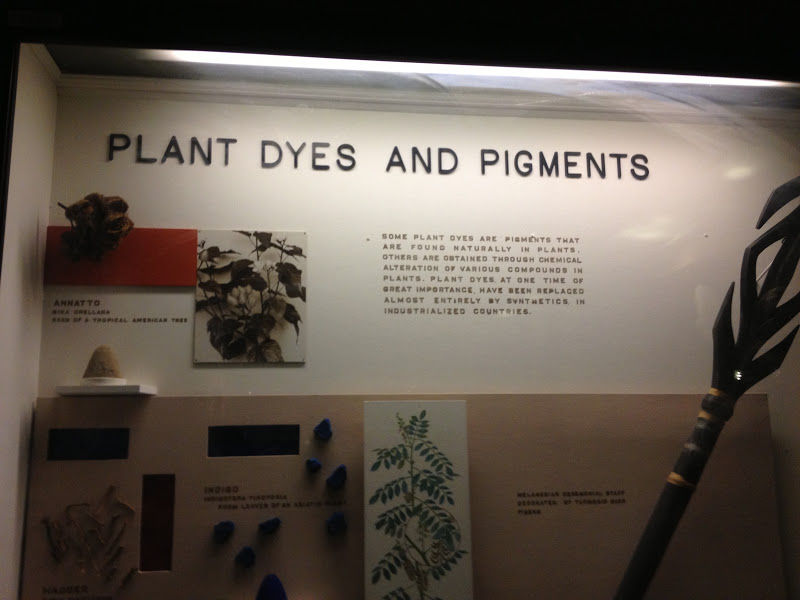
There were all sorts of textile-related things to pique my curiosity, from a brief exhibit on fashion

to Native American beadwork to Tibetan clothing and more!


I was captivated by an amazing collection of gemstones and jewelry, too. Eventually I went back to the hotel, took a nap, and then obsessively checked the USAir website to see if my Wednesday flight had been changed....

I was up at the crack of dawn on Wednesday and my flight was still on, so I ventured onto the Blue Line

and joy of joys, my plane took off exactly on time, and arrived a few minutes early.

All in all, I felt very lucky. I got home as quick as humanly possible; I had a lovely hotel in which to stay and had dear people around me; and I even made it home in time for the twins' Halloween parade.
However, I am deeply sad and concerned about the devastation that Hurricane Sandy has wrought on so much of New York and New Jersey. I hope you'll join me in doing whatever you can to help, whether it's donating blood or dropping off supplies to a collection point or making a financial donation to the Red Cross or another organization or fostering or adopting a displaced pet. In addition to making my own donation, I'm going to be donating 10 percent of all sales for the month of November on the Black Bunny Fibers ArtFire site to the Red Cross for Hurricane Sandy relief.
I had a class Sunday morning until noon (more lovely students!), and my flight wasn't scheduled to leave until 7 p.m. Because Philadelphia wasn't supposed to get hit as hard as NJ and NY, I figured there was a decent chance I would make it on that flight. (I was also skeptical that there would be any seats on flights leaving earlier Sunday afternoon.) I had a lecture from 3 to 4, and had planned on leaving right for the airport--only to learn just before 3 o'clock that my flight, too, was canceled. There were some panicked calls and some rooting around for hotel rooms, but things got worked out, and I was given a new room to check into at the same hotel.
At this point, the trip started to get a bit surreal. The show was over, but several of us were stuck for at least another night or two, and some of the folks who taught on Sunday had planned to stay another night anyway, and leave on Monday. I met up with a bunch of wonderful people in the hotel bar, like the amazing Fiona Ellis, modeling her Soakworthy fingerless mitts with matching nail polish.

We ended up having a really fun dinner with Franklin and his partner Tom, Fiona and her husband Rob, Brooke Nico, and Josh Bennett. We went to an Irish place out by Franklin's apartment, where the food was amazing and we were treated like royalty.

Hmm. Not sure that my photo of fried asparagus really reproduces how tasty it was!
My flight was rescheduled for Tuesday, but there was a lot of uncertainty about whether the East Coast airports would even be open at all. But that left me with a free Monday in an amazing city. Since the Art Institute was only a block and a half away, I headed over there bright and early Monday morning.

What a rare pleasure, to spend a day wandering around a spectacular collection of art. There were so many iconic works, including a phenomenal set of Impressionist works,


some Georgia O'Keefes, American Gothic, a wing full of modern art, all sorts of great paintings.


and saw beautiful pieces of furniture

and fragments from architecture and Tiffany lamps and all sorts of things to lift one's spirits. Even the day itself was bright and autumnal and breathtaking.


My flight on Tuesday was canceled in due course, and I was rescheduled for a Wednesday morning flight. Tuesday, I must confess, was a much less relaxing day for me. I really started to miss my family and the stress of being stranded far away, while so many awful weather-related things were happening on the East Coast, was getting to me. I was lucky to have dear friends around me (or a few clicks away) to help distract me (Thanks, T.M., K.V. & K.E.!)
Instead of moping around the hotel on Tuesday, I took another "field" trip. I went to see the Field Museum (see what I did there?) which is a museum of natural history. It was a brisk walk and the day was cloudy and chilly.

I did enjoy the walk, though, since I got a peek at the lake and got to see more of the downtown area.

The Field Museum was wonderful in a different way. How can you not love a huge dinosaur named (of all things) Sue?

There were all sorts of textile-related things to pique my curiosity, from a brief exhibit on fashion

to Native American beadwork to Tibetan clothing and more!

I was captivated by an amazing collection of gemstones and jewelry, too. Eventually I went back to the hotel, took a nap, and then obsessively checked the USAir website to see if my Wednesday flight had been changed....

I was up at the crack of dawn on Wednesday and my flight was still on, so I ventured onto the Blue Line

and joy of joys, my plane took off exactly on time, and arrived a few minutes early.

All in all, I felt very lucky. I got home as quick as humanly possible; I had a lovely hotel in which to stay and had dear people around me; and I even made it home in time for the twins' Halloween parade.
However, I am deeply sad and concerned about the devastation that Hurricane Sandy has wrought on so much of New York and New Jersey. I hope you'll join me in doing whatever you can to help, whether it's donating blood or dropping off supplies to a collection point or making a financial donation to the Red Cross or another organization or fostering or adopting a displaced pet. In addition to making my own donation, I'm going to be donating 10 percent of all sales for the month of November on the Black Bunny Fibers ArtFire site to the Red Cross for Hurricane Sandy relief.
Thursday, November 01, 2012
Chicago report (part 1)
I have always had a soft spot for the city of Chicago. Many years ago, Mr. Go-Knit-In-Your-Hat and I took a trip there, saw the sights and had a wonderful time. Almost four years ago, I went to visit Franklin and meet some of the wonderful women I'd met on a Ravelry forum I was involved with. And I just returned from yet another amazing stay in the Windy City, this time to participate in Vogue Knitting Live.

The moment I checked in, I knew I was going to spend the weekend surrounded by knitters, and so it was. I immediately ran into the lovely Brooke Nico

(shown mugging here with Lily Chin and Erin Slonaker of Yarn Market News). Knitters armed with yarn were everywhere, perched on couches in the spectacular lobby of the hotel (the Palmer House is full of history, and jam-packed with amazing architectural and decorative details).

Armed with my new I-phone, I was able to take plenty of photos. The first 24 hours that I was in the hotel, I found myself snapping photos of all sorts of weird things: a snippet of wallpaper, the moldings on a ceiling, even the design on the bolsters on my bed. It's that kind of a place, where everything is beautiful and interesting to look at.
Thursday evening was the teacher's meeting, which is such a blast. Over the years I have been fortunate enough to meet up with many of the same teachers and VK staff members at various events, and we've become friends. So it was a total pleasure to see folks like these

and these

and this studly fellow

as well as many others who were, well, let's just say a bit more camera-shy.
All too soon, it was time for bed and then the first day of classes rolled around. I taught a class on knitting mittens, and it was full of enthusiastic and delightful folks.
I then got a phone call from my pal Julie Turjoman (author of Brave New Knits) and that fast, had a lunch date. We went to the second-floor restaurant at the Art Institute. The food was delicious, the company superb, and the views of Chicago's downtown were spectacular.

I got to spend a bit of time at the marketplace, so of course I had to stop by and see Ron and Theresa of The Buffalo Wool Company;

the gorgeous Marly Bird of Bijou Basin;

and Denise of Lost City Knits.

Earlier in the day, I had seen a man wearing a kilt, and intrigued, I kinneared him. Later I realized that he was Denise's husband! And so he let me take a nice close-up photo of him in his kilt to replace the blurry, long-distance photo I had taken that day (like a big pervert, I was, taking I-phone photos of men in kilts I do not know. See what you have done to me, Dr. Mel?!?)

In a wonderful twist of fate, I ran into Philly pal Allison at the marketplace. Here we are standing in front of some of the Buffalo Wool yarn that I dyed:

Because I was trying to be good and not end up in the hospital again, I left the marketplace a little early, went up to my room and spent an hour or so just sitting with my feet propped up. I was a little nervous about traveling so soon after my hospitalization, and didn't want to take any chances.
Friday night was a cocktail party for teachers, sponsors and students, and it was held in the Red Lacquer Room, a ballroom that was, like the Palmer House lobby, full of amazing decorative details.

This is a feeble attempt to capture some of them. By this time, Taiu and Kersti of Koigu fame had arrived, so I got to spend some time catching up with them. I got to see some of my all-time favorite knitting people, like Fiona Ellis and Catherine Lowe, say hi to some new favorites like Ysolda Teague, and met some new lovelies, too. We had so much fun, but I was good and went to bed at a reasonable hour so I could be fresh for class the next morning.
Saturday I had another amazing batch of students, and then ended up hanging out with Kersti for part of the afternoon.
 I got to see the Koigu fashion show, which was full of amazing garments, many of which will be featured in the new Magazine (number 4) which will be out very soon:

I participated on a panel to discuss "when your passion becomes your profession," which was a complete blast because the people on it were so fun, caught a little bit of the Vogue fashion show, which showed some beautiful items from the upcoming Holiday Vogue (outstanding), and then (after another brief rest) it was the Banquet. Guest speaker was author and knitter Debbie Macomber (which, in case you have ever wondered, is pronounced like "cucumber"). Rumor has it that there was a certain table that got quite rowdy, and believe it or not, IT WASN'T MY TABLE! (ahem, Josh "Knituation" Bennett, cough cough).
Since this blog post is running long already, I'll stop here, and pick up with Sunday's show report tomorrow or the next day....

The moment I checked in, I knew I was going to spend the weekend surrounded by knitters, and so it was. I immediately ran into the lovely Brooke Nico

(shown mugging here with Lily Chin and Erin Slonaker of Yarn Market News). Knitters armed with yarn were everywhere, perched on couches in the spectacular lobby of the hotel (the Palmer House is full of history, and jam-packed with amazing architectural and decorative details).

Armed with my new I-phone, I was able to take plenty of photos. The first 24 hours that I was in the hotel, I found myself snapping photos of all sorts of weird things: a snippet of wallpaper, the moldings on a ceiling, even the design on the bolsters on my bed. It's that kind of a place, where everything is beautiful and interesting to look at.
Thursday evening was the teacher's meeting, which is such a blast. Over the years I have been fortunate enough to meet up with many of the same teachers and VK staff members at various events, and we've become friends. So it was a total pleasure to see folks like these

and these

and this studly fellow

as well as many others who were, well, let's just say a bit more camera-shy.
All too soon, it was time for bed and then the first day of classes rolled around. I taught a class on knitting mittens, and it was full of enthusiastic and delightful folks.
I then got a phone call from my pal Julie Turjoman (author of Brave New Knits) and that fast, had a lunch date. We went to the second-floor restaurant at the Art Institute. The food was delicious, the company superb, and the views of Chicago's downtown were spectacular.

I got to spend a bit of time at the marketplace, so of course I had to stop by and see Ron and Theresa of The Buffalo Wool Company;

the gorgeous Marly Bird of Bijou Basin;

and Denise of Lost City Knits.

Earlier in the day, I had seen a man wearing a kilt, and intrigued, I kinneared him. Later I realized that he was Denise's husband! And so he let me take a nice close-up photo of him in his kilt to replace the blurry, long-distance photo I had taken that day (like a big pervert, I was, taking I-phone photos of men in kilts I do not know. See what you have done to me, Dr. Mel?!?)

In a wonderful twist of fate, I ran into Philly pal Allison at the marketplace. Here we are standing in front of some of the Buffalo Wool yarn that I dyed:

Because I was trying to be good and not end up in the hospital again, I left the marketplace a little early, went up to my room and spent an hour or so just sitting with my feet propped up. I was a little nervous about traveling so soon after my hospitalization, and didn't want to take any chances.
Friday night was a cocktail party for teachers, sponsors and students, and it was held in the Red Lacquer Room, a ballroom that was, like the Palmer House lobby, full of amazing decorative details.

This is a feeble attempt to capture some of them. By this time, Taiu and Kersti of Koigu fame had arrived, so I got to spend some time catching up with them. I got to see some of my all-time favorite knitting people, like Fiona Ellis and Catherine Lowe, say hi to some new favorites like Ysolda Teague, and met some new lovelies, too. We had so much fun, but I was good and went to bed at a reasonable hour so I could be fresh for class the next morning.
Saturday I had another amazing batch of students, and then ended up hanging out with Kersti for part of the afternoon.


I participated on a panel to discuss "when your passion becomes your profession," which was a complete blast because the people on it were so fun, caught a little bit of the Vogue fashion show, which showed some beautiful items from the upcoming Holiday Vogue (outstanding), and then (after another brief rest) it was the Banquet. Guest speaker was author and knitter Debbie Macomber (which, in case you have ever wondered, is pronounced like "cucumber"). Rumor has it that there was a certain table that got quite rowdy, and believe it or not, IT WASN'T MY TABLE! (ahem, Josh "Knituation" Bennett, cough cough).
Since this blog post is running long already, I'll stop here, and pick up with Sunday's show report tomorrow or the next day....
Thursday, October 11, 2012
Happy National Coming Out Day
Every year, I post on this day, National Coming Out Day, to send love and support to my dear friends who are gay, lesbian, bisexual, transgendered. It takes a great deal of courage to be who you are in this world; it takes a great deal more courage to be yourself when so many in society respond with hate and bigotry.

So to my friends out there who are gay, lesbian, bi, transgendered, I salute you. I salute your determination to be who you are. I salute your courage in living openly and bravely in a world that all too often tries to deny you your civil rights and your very humanity. I love you and stand with you.
So to my friends out there who are gay, lesbian, bi, transgendered, I salute you. I salute your determination to be who you are. I salute your courage in living openly and bravely in a world that all too often tries to deny you your civil rights and your very humanity. I love you and stand with you.
Subscribe to:
Posts (Atom)