
Cold Comfort Farm
 by Stella Gibbons, started out the month on a great note. You may have seen the movie, starring Kate Beckinsale, but it's worth reading the book, too. It's a satire of all the British books that idealize the country and the country life. The story is simple enough: After Flora's parents die, the young woman arrives at her aunt's country farm, Cold Comfort Farm. Flora immediately decides that she must take her eccentric relatives in hand and improve their lives. Flora is a kind of anti-Emma: whereas Emma meddles in other people's lives only to learn that she doesn't always know what's best for other people, Flora meddles in other people's lives and succeeds spectacularly. I found this book really amusing and clever, and enjoyed it thoroughly.
I finished Nemesis
 by Jo Nesbo (the sequel to The Redbreast, which I read a few months ago). This series features Norwegian Inspector Harry Hole, ambivalent about his job and struggling to overcome his alcoholism. At the beginning of the book, Harry is in a relationship with a woman he met in the previous book in this series; he is still haunted by the death of his police partner (also in the previous book); and he is assigned to solve a bank robbery. As Harry delves deeper into his bank robbery case, an ex-girlfriend turns up dead and Harry may turn out to be the prime suspect. There's a lot going on in this mystery as plot lines cross and recross, weaving in strands of plot from the previous book and depicting Harry's emotional turbulence as he tries to solve all the crimes.
The Marx Sisters
 by Barry Maitland. After enjoying a later book in the Kolla/Brock mystery series, I went back and found the very first one, newly reissued. In this book, newly-assigned Kathy Kolla is called in with superstar investigator Brock to take a look at the death of a little old lady, found dead in bed in her apartment on a tiny, out-of-the-way street in London. Is it murder or simply natural causes? Hard to say. But when her sister turns up dead a few months later, it starts to look a lot like murder. Kolla and Brock are called back and end up engrossed in the drama of the small neighborhood -- WW II emigres, Lenin-loving elderly socialists, greedy property developers, the victim's son (cheating on his wife and in need of cash), and more.
The Malcontenta
 , also by Maitland, is the next book in the series. Kolla is called in to investigate the apparently suicide of a physical therapist at a new age clinic. She thinks it might be murder, and even though some of the higher-ups in the police force want her to back off, she continues plugging away at the case. Another solid mystery in this series.
Up at the Villa
 by Somerset Maugham. I'd never read anything by Maugham before but the book looked like a quick read and the setting -- a villa overlooking Florence in the years just after WWII -- sounded divine. Maugham has a very direct style, not flowery or packed full of words, yet he manages to say a lot about his characters and the action. The main character is Mary Panton, a British widow recovering from her unpleasant marriage by taking an extended vacation in a borrowed Italian villa. She is being courted by an old family friend who is significantly older than she is and wants to marry her. Most of the novel takes place over a two-day period, in which Mary's life begins as being fairly predictable and conventional, then takes a dramatic turn. One of the things I found so interesting about the book was the way it quickly built suspense due to events which take place over a short time period (I'm trying avoid spoilers); it was this that made the book hard to put down. Overall, I was left feeling as though I'd watched a wonderful old movie from the 1940s with witty repartee, a romantic European setting and characters much more interesting and multifaceted than they first appear. I will definitely seek out more Maugham to read.
A Vengeful Longing
 by R. N. Morris, is a mystery set in mid-19th century St Petersburg. It was atmospheric, with a good twisty plot and interesting characters. The author is very knowledgeable about tsarist Russia, but I would have appreciated a brief glossary of Russian language words in the back as they were sprinkled throughout. In an interesting twist, the lead investigator is Porfiry Petrovich, a character lifted from Crime and Punishment.
 The Queen's Secret
 by Jean Plaidy, was a fictionalized account of the life of Katherine of Valois, a French princess who lived in the 15th century. Katherine was married off to King Henry V of England. Strategically, the marriage between the English and French royal houses helped solidify King Henry's conquest of France. Sadly, Henry died shortly after their first son was born. This left Katherine in the difficult position of being the "Dowager Queen" when she was barely 21. As mother to the king, she had an important ceremonial role and was seen as having the potential to influence her son's actions as king. But there was also some potential risk that if she remarried and had children, those children could assert some kind of claim to the English throne should her firstborn die. Parliament passed a law imposing penalties should Katherine marry without the king's consent (imagine having to ask your nine-year-old son for permission to marry!).
So much of Katherine's life is unclear, given how long ago she lived, but she apparently fell in love with a Welshman named Owen Tudor. Historians disagree as to whether they were married and when, but they did have several children together. In time, Katherine and Owen's grandson would become King Henry VII, the last English king to win the throne via a battle and the first of the Tudor dynasty.
Overall, this was an entertaining but not terribly demanding read. I learned a bit about English and French history (Katherine lived at the same time as Joan of Arc) and it was interesting to learn about the forbears of the Tudors. Plaidy does a lot of projecting in fictionalizing the story, and she makes certain assumptions that might not be definitively supported by the historical record, given how incomplete written records were of that time.
The Dead Travel Fast
 by Deanna Raybourn (author of the Lady Julia Grey mysteries that I read last summer at the beach) was, alas, not another book in the series but was a stand-alone novel. I got a copy for free from the Amazon Vine program so I figured I'd give it a try. The story is about a Victorian Englishwoman who is left without much of an income when her grandfather dies. When an old school chum writes and asks her to visit, Theodora jumps at the chance to avoid either living with her married sister or marrying a man she isn't in love with. In turns out the school chum lives in Transylvania (groan) and so there is a plotline in which we are led to wonder whether a handsome, enigmatic count is in fact a vampire. Of course, Theodora falls in love with him but isn't sure if he reciprocates or whether he is human or the undead.
This was not a bad book for the genre, just formulaic. It had the features of the Gothic novel -- Victorian time frame, unmarried woman of noble character and empty bank account, charming rake who may not be what he seems, supernatural elements (vampirism and werewolves), a beautiful and desolate castle, and so on. The combination of the predictability and the vampire story line (honestly, I'm Twilighted out) made it less enjoyable for me.
The Weed That Strings the Hangman's Bag
 by Alan Bradley. Sequel to "The Sweetness at the Bottom of the Pie," and another Amazon Vine review copy, this was a mystery once again featuring eleven-year-old Brit Flavia de Luce. Flavia is a precocious child with a brilliant intellect and a passion for chemistry -- especially poisons. "The Weed..." takes a little longer to get goingthan its predecessor did; the murder doesn't happen until about 150 pages into the book, but Bradley's description of post-WWII life in a small village in Britain is charming enough to carry you through to that point.
A Severed Head
 by Iris Murdoch. This book is a bedroom farce, in which the characters look ridiculous one minute and pitiful the next. The narrator is Martin, a 40-something London wine merchant, who begins the novel by very smugly talking about how he loves both his mistress and his wife. Martin's about to get a come-uppance, however, because his wife Antonia soon tells him she wants a divorce. Not only has the cheater been cheated upon, but Antonia's been seeing Martin's close friend Palmer -- a double betrayal. The plot continues to twist as the novel goes on, but it wouldn't be fair to the reader to give all the surprises away.
A Severed Head had me laughing at the absurdity of all the bed-hopping: written in the early 1960s, it definitely bridges the gap between the sexual repression of the 50s and the free-love attitude of the 70s. But the farcical nature of book was overshadowed, for me, by the "frightfulness" and "ruthlessness" (to quote the book's subtitle) of the characters. Just when they seem to be experiencing some normal human emotion, their emotions do a 360-degree turn and they seem reprehensible again. There's no end of power games, manipulation and self-delusion, along with deceit and betrayal.
I think what made me the most dissatisfied about the book was the fact that there just wasn't anyone I was rooting for. Each character seems at time to be a victim, then a perpetrator; each character alternates between acting like an ass and looking worthy of sympathy. The characters use and discard each other, but seem unable to turn away from each other. Even Martin's obsessive attraction to Honor Klein (his wife's boyfriend's half-sister -- got that?) is by turns coltish and icky. I think if I had felt more of a connection to the author's writing style, I could have dealt with the absurdity of the plot and characters, and if I liked the characters more, I could have dealt with not grooving on the writing style, but the combination of not being attracted by either was what left me without more affection for the book. I don't mean to suggest that I think Murdoch is a bad writer -- just that I didn't love her writing style as a matter of personal taste. This was the first book I've read by Murdoch and I'm not sure I'll read more.
So there you have it: the March 2010 book report. Tell me what you're reading -- I get lots of good recommendations from my faithful commenters.




 (PotterCraft; MSRP $22.99) which officially went on sale this week.

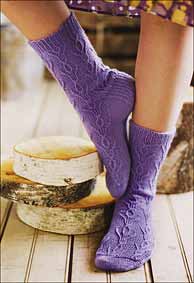


 -- coming soon!


 -- the last Hercule Poirot mystery (which I believe Agatha Christie held back so it could be published after her death), you may see some vague similarities: Wexford tries to prove that a nasty bit of goods named Eric Targo is an opportunistic serial killer who instigates other people into committing crimes, and who has avoided detection for years. This one was a bit slower than most Wexford books, with less action and a lot of reminiscing. Not bad, but not the series' best.
 by Rennie Airth. I read the first and third installments in this mystery series last year, and finally got the chance to read the middle one. Rennie Airth is a good writer but slo-o-w when it comes to putting out sequels; there was a gap of several years between each. His retired detective, turned gentleman farmer, is entangled in the investigation when a local girl is brutally murdered. Investigators determine that a sociopathic serial killer is on the loose...
 by Joe Queenan. I've liked Joe Queenan's writing for a while, although it's so acerbic that I tend to savor it in small amounts, like spicy food. But I really came to appreciate all that Queenan has accomplished, as a writer and as a man, as I read
  by J.D. Salinger, I decided to finally read this classic of 20th century literature. I wasn't sure what to expect, having been told by various folks that they loved it, that they hated it, that I was too old for it, that Holden was a "whiny bitch," and just about every other reaction you can imagine. It didn't take long to read it, but I felt ambivalent about the book right up until the end. I easily understood why it was considered groundbreaking, but it wasn't until I was about twenty or thirty pages from the end that something clicked and Holden became real to me. I'm glad I read it, even if it now seems a tinge dated, and I found myself laughing out loud at some parts, underlining lines that I thought were especially good, and occasionally wincing at Holden's painful experiences in the world.
 , by Stephen Carter, was one of the free selections I received from the Amazon Vine program. Carter is a well-regarded law professor at Yale, and, interestingly, writes fiction in his spare time. His earlier books had gotten pretty good reviews, and he's certainly a brilliant guy, so I figured I'd give this one a try. Alas, I hated it. The main character is a woman who travels across the country, to a remote Colorado town, to see her former lover, who has a terminal illness. It was hard for me to suspend my disbelief from the get-go, however. Rebecca's willingness to drop everything in her life (including her young daughter) to return to Colorado is hard to swallow, and she struck me as too much of a Lifetime TV Movie character: strong, beautiful, supposedly brilliant, but not so smart when it comes to jeopardizing her emotional and physical well-being by hanging out with a Svengali-like man from her past. Her lover, the "Jericho" of the title, is a former CIA director and adviser to presidents, and part of the tension in the book is whether he has, in fact, lost his mental faculties due to his terminal illness, whether he was/is insane all along, whether his daughters (who are taking care of him in his final days) are sane, whether operatives from the US or foreign countries are really after him to prevent him from revealing juicy state secrets, etc. etc. I bailed about 100 pages in when picking the book up seemed like a chore more than a pleasure.
 by Tasha Alexander, another Amazon freebie, is a very lightweight historical mystery set in Victorian-era Constantinople. The lead character is Lady something-or-other (Emily?) who is on her honeymoon with her hunky husband; said hunky husband has a suitably mysterious career as a sort of spy-slash-detective working for the British government. A half-British, half-Turkish harem girl is murdered, and Lady Emily & her husband are asked to find out who did it. Good beach reading; glamorous locales, lots of silk skirts & horseback rides in the moonlight, a not-terribly-taxing-but-entertaining mystery.
 by Willa Cather. Tom & I have a friend who is an English professor who has studied Willa Cather extensively, and she was aghast to realize I had never read any of her works. I started out with this book, and was charmed by it. The book is really more of a character study and a study of place, as it follows the career of two missionaries sent to establish a Catholic diocese in the southwest territories during the 1800s. Having lived in Arizona for a year and traveled around a bit in the southwest, I found the descriptions of place to be fascinating. The characters were beautifully drawn, and Cather writes with a direct but lyrical style. I'll definitely read more of Cather; in fact,
  by Nigel McCreary. I was lent this by a friend who also enjoys mysteries and I honestly didn't realize how gruesome some of the details were until I finished the first chapter. (I think I actually yelped aloud on the Stairmaster.) This was an engrossing, if very creepy, read, a decent mystery but not for the faint-hearted. The murderer is an older woman whose M.O.isto befriend lonely elderly women, insinuating herself into their lives, then poisoning them and keeping all their money and property. The main detective is a man suffering from a bizarre neural condition in which he experiences sounds as a kind of taste (synesthesia). He has been out on medical leave because even ambient noise causes him to experience a variety of strange, and sometimes very unpleasant, taste sensations; it sounds weird, but the author does a good job of describing how awful the condition is. The detective returns from medical leave to try to solve this case.
 by Fred Vargas (who's actually a she): We take a break from Scandanavian and British detectives just long enough to try out a French commissaire. Commissaire Adamsberg seems unconventional to his colleagues, but no one can argue with his success rate in solving crimes. In the first of the series (also lent to me by a pal), he is troubled by the strange actions of a mysterious person drawing chalk circles around random objects on Paris sidewalks. No one else in the police force seems very concerned, but Adamsberg is convinced that the circles are a precursor to murder -- and he turns out to be right. Very French, a little quirky, and very enjoyable.
 by Barry Maitland. Another good lend from a friend; this is one in a British series featuring detectives Brock and Kolla. Brock and Kolla are called in to solve the murder of a young woman stabbed to death in her home. The detectives try to determine if the murder is part of a larger series of deaths, and connect it -- along with the deaths of at least one other woman -- to an amateur theater group.


