

Showing posts with label kitteh lovers. Show all posts
Showing posts with label kitteh lovers. Show all posts
Tuesday, August 18, 2009

Wednesday, August 12, 2009
Catching up
Oh, boy, I'm really behind on blogging. Well, as you probably guessed from our photos, we had a great time our first week at the beach:

and our week there flew by. We had amazing weather.

There were two days when it started out kind of gray but the clouds burned off and we ended up with good beach days anyway. We had only one rainy day, and on that day, we decided to take the kids to a small aviation museum in Cape May. We didn't expect that we'd like it so much, but it was a wonderful place, with lots of hands-on exhibits relating to the science of flying,
 Elvis tries out a Coast Guard rescue basket
and all sorts of planes, jeeps and other vehicles that the kids were allowed to sit in and on:


 They also had some interesting memorabilia from the war years, like posters:
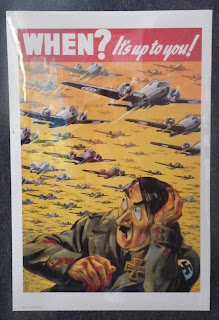
and an exhibit set up to look like a typical 1940s house, complete with real live cat snoozing on a chair:

So if you are vacationing on the southern part of the Jersey shore, and end up with a lousy weather day (or want to take a break from the sun for a little while), I'd recommend the Cape May aviation museum as a great way to spend a couple of hours.

Unfortunately, our vacation clashed with the arrival of Wendy, of Wendyknits fame, who was in town to teach some toe-up sock classes at Loop and to show off the sample socks

from her wonderful book, Socks from the Toe Up .
.

Even though I wasn't able to make the Friday night gathering, I stopped by on Saturday in order to say hi to Wendy (and send personal regards from Charcoal to Lucy). The socks are gorgeous in real life, so if you haven't already picked up a copy of this book, I highly recommend it (my No-Bull Review is here).

(Rumor has it that Wendy is an excellent teacher and both workshops were great...)
While I was there (cough, cough), I could not help myself; I had to try out some of the new goodies from Blue Sky's new Spud and Chloe line. And of course Laura next door at Spool tempted me with some lovely fabrics. I'll do some photos next post...

and our week there flew by. We had amazing weather.

There were two days when it started out kind of gray but the clouds burned off and we ended up with good beach days anyway. We had only one rainy day, and on that day, we decided to take the kids to a small aviation museum in Cape May. We didn't expect that we'd like it so much, but it was a wonderful place, with lots of hands-on exhibits relating to the science of flying,
 Elvis tries out a Coast Guard rescue basket
and all sorts of planes, jeeps and other vehicles that the kids were allowed to sit in and on:


 They also had some interesting memorabilia from the war years, like posters:
and an exhibit set up to look like a typical 1940s house, complete with real live cat snoozing on a chair:

So if you are vacationing on the southern part of the Jersey shore, and end up with a lousy weather day (or want to take a break from the sun for a little while), I'd recommend the Cape May aviation museum as a great way to spend a couple of hours.

Unfortunately, our vacation clashed with the arrival of Wendy, of Wendyknits fame, who was in town to teach some toe-up sock classes at Loop and to show off the sample socks

from her wonderful book, Socks from the Toe Up
.
Even though I wasn't able to make the Friday night gathering, I stopped by on Saturday in order to say hi to Wendy (and send personal regards from Charcoal to Lucy). The socks are gorgeous in real life, so if you haven't already picked up a copy of this book, I highly recommend it (my No-Bull Review is here).

(Rumor has it that Wendy is an excellent teacher and both workshops were great...)
While I was there (cough, cough), I could not help myself; I had to try out some of the new goodies from Blue Sky's new Spud and Chloe line. And of course Laura next door at Spool tempted me with some lovely fabrics. I'll do some photos next post...
Tuesday, April 14, 2009
No-Bull Book Review: Socks From the Toe Up, by Wendy Johnson
If you've wandered around the knitting blogosphere for any length of time, you've probably run into WendyKnits, the blog of unbelievably prolific knitter (does she EVER sleep?) and cat-lover Wendy Johnson. There's no doubt that Wendy is a kick-ass knitter; look at her finished projects, and you'll see stranded & aran-style masterpieces designed by the likes of Alice Starmore and Dale of Norway, scads of lace, and socks. Lots and lots of socks, many of them Wendy's own designs. Wendy generously offers some of her sock patterns for free, and sells others as individual patterns at fine establishments like The Loopy Ewe.

So it shouldn't be that surprising that Wendy's written a sock book: Socks from the Toe Up: Essential Techniques and Patterns from Wendy Knits, (Pottercraft 2009; MSRP $22.95, $15.61 via the link above)), hot off the presses (Amazon says it's in stock as of this morning). I was extremely pleased to receive a review copy and can tell all of you sock-lovers out there: you're going to want to get a copy ASAP.

I usually knit socks from the cuff-down, mostly out of laziness (I don't need a pattern to do it that way, so it's my default setting). I've knit toe-up socks on occasion, though, and do like the way that they allow you to make the most out of your yardage. Divide the ball in two, one for each sock and knit 'til you run out of yarn.* If you're not sure how far your sock yarn skein will go, this is a very easy way to ensure you don't make the first one too long, thus having only enough yarn to end up with a too-short second sock.
Wendy is a major proponent of toe-up socks, and her book contains over 20 patterns for them, ranging from the basic to the beautifully ornate. So without further ado, let's take a closer look.

The book begins with a one-page introduction, in which Wendy explains how she got addicted to socks, and why she focuses on toe-up socks (a hatred of grafting toes being the chief reason). Next is an excellent technical section (we love those technical sections!) beginning with nuts and bolts for novice sockknitters:
She then covers specific knitting skills that even proficient sockknitters might not know but which are necessary (or at least helpful) to know to knit toe-up socks:
Overall, it's a great compilation of skills that will help the reader craft good-looking and well-fitting socks.
Next we turn to the pattern section. Wendy starts with three basic sock patterns (meaning that these are knit in stockinette rather than any pattern stitch). Sock 1 uses short-row toe and heel; Sock 2 uses a gusset heel (and lets the knitter pick the cast-on); and Sock 3 uses a slip-stich heel (again, letting the knitter pick the cast-on). Each sock is illustrated with several pictures, including close-ups so the knitter knows what the finished sock ought to look like. (My 44-year-old eyes would have liked a darker background for more contrast with the white sock yarn, but we all know I'm as old as dirt and your younger eyes may do just fine.) If you like self-patterning yarns, or if you're new to sockknitting, these plain vanilla socks will be great go-to patterns.
The remaining patterns are divided into four categories: Lace Socks (the largest section, with 12 patterns), Textured Gansey Socks (3), Cabled Socks (2) and Sportweight Socks (3).
You can see that Wendy loves lacy socks. Of the dozen patterns in this section, a few are fairly easy, for the beginner, and then the remainder get progressively more complex, like the On Hold Socks:
 and the Riding On The Metro Socks:

From the gansey section, we have the Traditional Gansey Socks:

and from the cable section, these are the delightfully unisex Bavarian Cable socks:

Last, there are three patterns done in sportweight yarn; these will knit up a bit faster, the possible trade-off being that they are also slightly thicker and may not fit into every pair of shoes you own. These are the Serpentine Socks:

The book finishes up with a brief section on Abbreviations and Definitions, contact info for some of the bigger sock yarn manufacturers, and links to on-line help.
Overall, this is a beautiful collection of patterns, with variety, complexity and style. Many of the patterns are unisex, too, which is nice for expanding your pool of potential recipients. I like that there are multiple photos of each sock, including some close-ups; that some patterns are shown in solids while others are shown in nearly-solid handdyes; and I love the extensive technical section in the beginning.
As for the nuts and bolts, Socks from the Toe Up is a paperback, a little bit smaller than 8 1/2 by 11 in size, 128 pages, with color photographs all over the place. All the photographs are shot against white/gray backgrounds, so the colors of the sock yarn really pop. (It's a clever detail that the inset boxes for each pattern are color-coordinated to match the yarn that particular sock is knit in.) If I had to make one suggestion, I would propose using some lighter-colored sock yarns; there are one or two patterns (like the grape-colored pair) in which I found it hard to see the details of the stitch pattern clearly enough. The more complex patterns are charted if you're a chart fan. As far as gauge, the three sportweight patterns are knit at 6.5 sts per inch, while the remainder are mainly 8 sts per inch, with a few at 7.5 sts per inch. Except for one of the basic patterns in the beginning, which is knit on DPNs, the rest of the socks are written for two circular (or magic loop) method. This is easily altered if you prefer DPNs, though. Most patterns are written for at least two sizes, Medium and Large (Medium around 8 or so inches circumference, Large for around 9 inches or so).
So we give two thumbs up (or should I say two big toes up?) for Socks From The Toe Up. In my opinion, there's no such thing as too many good knitting books -- or too many sock books, and this book is sure to provide you with many hours of sockknitting pleasure.
*How do I divide it in half evenly, you ask? One way is to weigh the skein on a postal scale before dividing, then weigh the first ball you're winding off 'til it weighs half of what the whole ball weighed. Or if you have an umbrella swift, count the loops when it's stretched out, and wind off half of them. The book contains an inset discussing the issue in more detail.

So it shouldn't be that surprising that Wendy's written a sock book: Socks from the Toe Up: Essential Techniques and Patterns from Wendy Knits
, (Pottercraft 2009; MSRP $22.95, $15.61 via the link above)), hot off the presses (Amazon says it's in stock as of this morning). I was extremely pleased to receive a review copy and can tell all of you sock-lovers out there: you're going to want to get a copy ASAP.
I usually knit socks from the cuff-down, mostly out of laziness (I don't need a pattern to do it that way, so it's my default setting). I've knit toe-up socks on occasion, though, and do like the way that they allow you to make the most out of your yardage. Divide the ball in two, one for each sock and knit 'til you run out of yarn.* If you're not sure how far your sock yarn skein will go, this is a very easy way to ensure you don't make the first one too long, thus having only enough yarn to end up with a too-short second sock.
Wendy is a major proponent of toe-up socks, and her book contains over 20 patterns for them, ranging from the basic to the beautifully ornate. So without further ado, let's take a closer look.

The book begins with a one-page introduction, in which Wendy explains how she got addicted to socks, and why she focuses on toe-up socks (a hatred of grafting toes being the chief reason). Next is an excellent technical section (we love those technical sections!) beginning with nuts and bolts for novice sockknitters:
- a section on tools (e.g. different types of needles, sock blockers);
- a discussion of kinds of sock yarn;
- directions on how to measure the foot;
- the important of gauge as it relates to fit.
She then covers specific knitting skills that even proficient sockknitters might not know but which are necessary (or at least helpful) to know to knit toe-up socks:
- how to create the toe (including short-rows, figure-eight, a Turkish cast-on, and others);
- how to knit socks on various types of needles (dpn, two circular, one long circular);
- different ways to craft the heel (short row, gusset, heel stitch),
- a selection of bind-offs (the bind-off is critical because it must stretch enough to allow the wearer to put the sock on yet remain snug enough to hold the sock up).
Overall, it's a great compilation of skills that will help the reader craft good-looking and well-fitting socks.
Next we turn to the pattern section. Wendy starts with three basic sock patterns (meaning that these are knit in stockinette rather than any pattern stitch). Sock 1 uses short-row toe and heel; Sock 2 uses a gusset heel (and lets the knitter pick the cast-on); and Sock 3 uses a slip-stich heel (again, letting the knitter pick the cast-on). Each sock is illustrated with several pictures, including close-ups so the knitter knows what the finished sock ought to look like. (My 44-year-old eyes would have liked a darker background for more contrast with the white sock yarn, but we all know I'm as old as dirt and your younger eyes may do just fine.) If you like self-patterning yarns, or if you're new to sockknitting, these plain vanilla socks will be great go-to patterns.
The remaining patterns are divided into four categories: Lace Socks (the largest section, with 12 patterns), Textured Gansey Socks (3), Cabled Socks (2) and Sportweight Socks (3).
You can see that Wendy loves lacy socks. Of the dozen patterns in this section, a few are fairly easy, for the beginner, and then the remainder get progressively more complex, like the On Hold Socks:
 and the Riding On The Metro Socks:
From the gansey section, we have the Traditional Gansey Socks:

and from the cable section, these are the delightfully unisex Bavarian Cable socks:

Last, there are three patterns done in sportweight yarn; these will knit up a bit faster, the possible trade-off being that they are also slightly thicker and may not fit into every pair of shoes you own. These are the Serpentine Socks:

The book finishes up with a brief section on Abbreviations and Definitions, contact info for some of the bigger sock yarn manufacturers, and links to on-line help.
Overall, this is a beautiful collection of patterns, with variety, complexity and style. Many of the patterns are unisex, too, which is nice for expanding your pool of potential recipients. I like that there are multiple photos of each sock, including some close-ups; that some patterns are shown in solids while others are shown in nearly-solid handdyes; and I love the extensive technical section in the beginning.
As for the nuts and bolts, Socks from the Toe Up is a paperback, a little bit smaller than 8 1/2 by 11 in size, 128 pages, with color photographs all over the place. All the photographs are shot against white/gray backgrounds, so the colors of the sock yarn really pop. (It's a clever detail that the inset boxes for each pattern are color-coordinated to match the yarn that particular sock is knit in.) If I had to make one suggestion, I would propose using some lighter-colored sock yarns; there are one or two patterns (like the grape-colored pair) in which I found it hard to see the details of the stitch pattern clearly enough. The more complex patterns are charted if you're a chart fan. As far as gauge, the three sportweight patterns are knit at 6.5 sts per inch, while the remainder are mainly 8 sts per inch, with a few at 7.5 sts per inch. Except for one of the basic patterns in the beginning, which is knit on DPNs, the rest of the socks are written for two circular (or magic loop) method. This is easily altered if you prefer DPNs, though. Most patterns are written for at least two sizes, Medium and Large (Medium around 8 or so inches circumference, Large for around 9 inches or so).
So we give two thumbs up (or should I say two big toes up?) for Socks From The Toe Up. In my opinion, there's no such thing as too many good knitting books -- or too many sock books, and this book is sure to provide you with many hours of sockknitting pleasure.
*How do I divide it in half evenly, you ask? One way is to weigh the skein on a postal scale before dividing, then weigh the first ball you're winding off 'til it weighs half of what the whole ball weighed. Or if you have an umbrella swift, count the loops when it's stretched out, and wind off half of them. The book contains an inset discussing the issue in more detail.
Subscribe to:
Posts (Atom)


