Showing posts with label fabric. Show all posts

Sunday, June 10, 2012

Meanwhile, on a small farm in Kansas....

Don't have any knitting that I can show you right now, so how about another quilt?


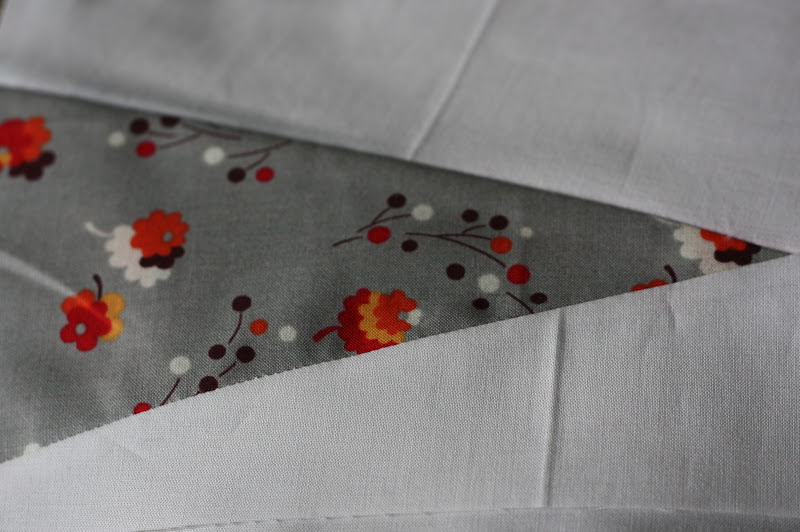
A couple of months ago, I bought some fat quarters at Spool. The fabric was designed by Denyse Schmidt, and is a re-issue of a line called Flea Market Fancy. One thing that is fascinating to me, as a knitter looking at the world of quilting, is the different ways that these crafters approach their raw materials. Many knitters seem to get very bent out of shape when a yarn or color of yarn is discontinued. Publishers and yarn companies get all sorts of grumpy letters asking why a particular yarn is discontinued, or complaining that the yarn used in a book or pattern isn't available in every knitting shop in the world. Yarn lines are designed to last for at least a few seasons, if not longer, and lots of attention is paid to creating patterns designed especially for use with a specific yarn. On the other hand, quilting fabric collections (other than solids) are understood to be available only for a limited time. (I think, and I'm sure that my readers in the know will correct me if I am wrong, that most fabric collections have one or two production runs, and then that's it.  They are retired.) If the pattern you're using is more than a few months old, chances are you couldn't find the fabric you're looking for even if you wanted to. Quilters seem much more blase about the fact that they may have to pick out a different collection or set of fabrics, or dip into their stash and leftover bits, when beginning a new project.


I do understand that there are more variables with knitting. For example, there are at least seven different weights or categories of yarn, each of which handles differently and knits to a different size, whereas most quilting shops carry all their collections in a single weight of fabric, quilting cotton (with maybe one or two other weights, like home dec fabric and the vinyl stuff for raincoats).  The fact that knitting takes a lot longer means there's more at stake if you mess up the size of the knitted fabric you're making, and so on.

However, it does seem to me that there is a different mentality between the two crafts, a difference I find fascinating.  The point of this digression (to the extent there is one!) is that the fabric I bought for this quilt happens to be a somewhat unusual thing in the quilting world, a line of fabric that sold out, but was so popular that it was brought back for another run a while after it first appeared.

I found that intriguing, so I decided to buy some of it and play with it, to see what all the fuss was about.


The predominant colors that I chose were a coral-red, gray, a soft aqua blue and brown. I have to say that the colors did work beautifully together, and the fabrics looked good whether they were small prints, nearly solids or big prints.


I was inspired to try Film in the Fridge's tutorial on making scrappy triangles. I'd never done triangles like that before, and I wanted to see what it was like.  I wanted to feature the fabric I'd bought rather than use of lots of scraps, so most of the triangles are made out of a single print; just for fun, I did a handful "scrappy"-style, with multiple prints. I used two shades of white/off-white to set off the triangles, and then I used the leftover browns for binding.


I even went a little nutty and did a set of mini-triangles to put on the back.


I had a lot of fun making this one, and I learned a lot from it too.  Thank you, once again, to my helpful quilt holder, a.k.a. Boy Twin.....


Friday, May 18, 2012

Springing ahead

I know that technically, the first day of spring in these parts falls in March, but for me, May is when spring really seems to begin. Our neighborhood is full of gorgeous blooming flowers:  we've got yer clematis, we've got yer snowball viburnum, we've got yer lilacs....Right now we've even got a few roses about to bloom.


Spring's a good time for freshening things up, and in the next couple of weeks/months you may notice some style changes here at the blog and the BBF website. I'm giving my web presence a badly-needed update.  With the help of a wonderful graphic designer, I'll be playing around with the look of the blog, as part of a bigger effort to create a more professional and integrated website.  When it's all done, you'll find a single website that includes the blog, my on-line shop, and information about my other knitting-related endeavors (like teaching and booksigning dates, a gallery of finished patterns, and so on). I'm hoping to have the new website in place by the time Sock Yarn Studio is released this fall.

Things should stay relatively quiet here until later in June. Sock Yarn Studio is being printed or sent to the printer or on a slow boat back from the printer or on a slow boat to the printer; regardless, there's not much to do now until the book is finished and here later this year. In the meantime, spring means lots of school events, recitals, and concerts. It's also the time of year when I tend to pick up some design projects that will come out later on in the year, so there's lots and lots of knitting going on, too.

And when I need a break from knitting, there's always the fabric.....


 like these triangles, made using the excellent tutorial found on one of my favorite quilting blogs, Film in the Fridge, with Flea Market Fancy fabric from my favorite fabric shop, Spool.


Monday, November 14, 2011

I need your help!

I spent most of the weekend at Loop, and what a wonderful weekend it was!  Craig and his staff are always great fun to hang out with and they always treat me like royalty. Plus it's inspiring being surrounded by so many beautiful yarns and projects.

My Saturday class was scheduled to begin at 10, but the Schuylkill mocked me, sucking us into a huge traffic jam. A trip that normally would take 20 minutes on a Saturday morning took close to an hour and half -- feh.  My students were very understanding about me being late, though, so we pushed the class back half an hour and went 10:30 to 1:30ish.  I love teaching the Handpaints class. It's always filled with people who, like me, are fascinated with handpainted yarns and love knitting with them. By the time we're done with the class, I can actually see how a little light comes on the eyes of the students: they understand how handpainted yarns work and why they do what they do, and it gives them a whole new window on their knitting.

After class, I was able to hang out at the shop and see some of the lovely customers that came into Loop.


Aileen, "Kristin Dee" (if that is her real name) and Sallykins

I also got to see Mary Kay (who brought lots of beautiful projects she'd knit in BBF), Jenny the vet, Sam, Merrill, Martha, and many other knitting friends. I also got a chance to look around. Loop has always had a delectable assortment of yarns, but I was especially entranced by all of the Rowan (Cocoon! Wool-Cotton! Lima! Kidsilk Haze!) and the Brooklyn Tweed yarns (Shelter and new Loft).


Yes, some Shelter ended up coming home with me (although I was sorely tempted by the Loft, too, and I heartily believe there is a Cocoon something in my future).  I also had to stop next door to see what was new at Loop's sister store, Spool.  Laura had plenty of goodies for me to ogle, and I found that I simply couldn't resist Amy Butler's new Lark collection:


and the new Echo collection by Lotta Jansdottir:


I am now pondering what to do with them. The Lark fabric is so vivid, and the Echo is much lighter, with lots of creamy white, so I'll have to find just the right patterns for them.

Sunday ended up being a much smoother day. There was no traffic so I had plenty of time to get into the shop and get ready for the class.  I was really pleased to meet one of my most excellent customers, Tonia, who took my class and then hung out for a while. She had lots of lovely projects to show me and I was really happy to finally meet her in person.  I only had my cell phone with me to take photos, but this is a shot of her Girasole:


Stunning, isn't it?

After class, sweet Anmiryam dropped by, too, and it was terrific to see her, since I've been so crazed lately I haven't had much of a chance to see anyone in the last few months. Tom even brought the kids by, since they were excited that I had a "show," and it was fun to have them around, taking part in my big weekend. A huge thank-you to Craig and the staff of Loop for putting up with my wisecracks and being such fabulous hosts.

But before I sign off, I am asking you all for your help. I now have a bunch of Shelter in the Faded Quilt color:


While I was hanging at Loop, I cast on the Sullivan sweater, designed by Whitney Gegg-Harrison. I really want to finish this sweater so I can wear it, since I so rarely manage to knit sweaters for myself. So here's where your help comes in:  Remind me about my sweater. Harass me, harangue me, shame me. Do whatever it takes to help incent me to finish it. I will do an update of my progress on the first of every month 'til I am done. My goal is to finish it by my birthday, in March.  I'll take a photo of where I am tomorrow and post it so we have a reference point. What do you think?  Can I finish something for myself?  Will you mock me, cajole me, remind me until I'm done?

Thursday, May 05, 2011

Seeing patterns

I've been playing around with sewing and quilting in the last few months. It sounds funny, but since so much of my knitting is centered around deadlines, I find that having a creative outlet entirely separate from the knitting/spinning world is refreshing for me. What's been especially fun: seeing how things have changed in the world of fabric -- or maybe it's more a function of my having had outdated ideas about what fabric and quilting and sewing are all about. I've been knocked out by the wide variety of fabric choices out there -- traditional ones, like checks and dots, but in all sorts of colors; fun ones, with aliens or mermaids or dancing vegetables; lush, vibrant florals like the ones created by Kaffe Fassett; Japanese imports; organics; and even a whole new world of print-on-demand fabrics via places like Spoonflower, where you can upload designs and get them printed in small quantities (or order fabrics from indie designers who sell via the Spoonflower site). I'm really fortunate to have access to a bricks-and-mortar shop like Spool, and I've discovered some terrific on-line sites and blogs -- True Up is one of my current faves.

It's also been fascinating to see what's happening in the world of quilting design. Everybody has their druthers when it comes to style and I've found that I"m no different. Not surprisingly, I find myself infatuated with color and how expert designers combine colors and patterns. Of course there are the incredible designs by Kaffe Fassett and Liza Lucy --the colors and combinations of colors they use make my heart sing. It was also fascinating for me to see the work of Jane Brocket; her quilting book uses lots of lush fabrics but in larger swathes of fabric rather than many small shapes pieced together.

But I've also been looking at a lot of quilts that go by the name "modern" -- and without stirring up a whole debate about what's modern and what's traditional, I'm talking about quilters who play with the use of solid or nearly solid fabrics, make sashing a design element, and incorporate pared-down geometric shapes-- often larger rather than postage-stamp sized, pieced quilt backs and free-motion quilting. (I've found this Flickr feed to be especially full of interesting stuff.) I hadn't realized that there were quilters out there doing this sort of thing, so it was a revelation to discover a whole thriving community of them with nary a Sunbonnet Sue in sight.

As someone who's been immersed in a subculture of the craft world for so long, I've been finding some of the parallels between the knitting blog0sphere and the quilting blogosphere to be interesting. The role of the internet plays in shaping the craft? The need to support local bricks-and-mortar shops as well as on-line businesses? Indie designers versus large companies? Whether designers should give patterns out for free? Process versus production? All of these issues are explored in both the knitting and quilting worlds. Recently there was a blogging brouhaha arising out of the suggestion that quilting was being "dumbed down", and I couldn't help but think about similar debates in the knitting world that erupted during the time when novelty yarn scarves were everywhere or when people were obsessed with quick-knitting super-chunky yarns and nothing else. (Pretty please don't debate these issues in the comments.....they've been done to death elsewhere. Me, I think people should do what makes them happy. For some, that will involve pushing the envelope and constantly trying new things; for others, that will entail a less intense approach to a craft. For me, it will involve both, depending on what kind of mood I'm in. To use a phrase that I am sick of hearing, "it's all good.")

Anyway, if you happen to notice that I'm showing you photos of fabric-related projects, don't be alarmed. Much of what I'm knitting is on deadline for future publications, which means I can't talk about it yet here. So in the meantime, allow me to distract you with these photos of some pillow covers I made recently.


Fabric by Scarletfig (Etsy shop here)


I was, of course, infatuated with the bunny


French Window Pillow pattern by Patty Young (free here)

They are already a teeny bit wrinkled, but that's just a sign that they've been used and loved. Which is really what it's all about, eh?

Friday, February 11, 2011

Fabriclovers & quilters

I have to confess to an increasing fascination with modern fabrics and quilting. I blame this entirely on my pal Liza, who is an extremely talented quilter/designer/author (not to mention quilting collaborator with the great Kaffe Fassett). Liza has a quilt pattern in the new Quilt Magazine and I had the good luck to see it in person last weekend.


Sunny Side Up Quilt (April/May 2011 Quilt Magazine)


The colors are so vibrant that the photos in the magazine can't really do it justice. I'm asking Mr. Go-Knit-In-Your-Hat for a kit for this quilt for my birthday present....(available on Liza's website, link above -- got that, Tom?).


Habitat (I think it's the Pastoral colorway)

I also saw that designer (and Philly resident) Jay McCarroll has a new line of fabric out called Habitat. I really liked Jay's previous fabrics, so I was very pleased to see that Spool in Philly is carrying it. In fact, Spool is having a Habitat Party with Jay tomorrow, Saturday, Feb. 12th, from 2 to 5 p.m. Details here. (Unfortunately Saturdays can be tough for me due to kid activities, so I won't be able to make it but I'm hoping to get my hands on some of the fabric soon.) One of my "six degrees of separation" claims to fame is that my dear aunt Carol (for whom I was named) used to be Jay's mailman. (Well, sort of. I should say "mail-woman" because my aunt is not my uncle, and she was actually the postmistress of the local post office in the rural part of Pennsylvania where Jay grew up as opposed to his letter carrier.) So if you're in the neighborhood, stop by the party.

Monday, May 10, 2010

Blog Tour: Simple Shapes, Spectacular Quilts

I am thrilled to be a part of the STC blog tour for Kaffe Fassett's Simple Shapes Spectacular Quilts: 23 Original Quilt Designs (STC 2010; MSRP $35.00, but available via the link for $23.10 at the time of this writing), by Kaffe Fassett with Liza Prior Lucy. Many, I hope most, of you knitters are familiar with Kaffe Fassett's non-quilting fiber work. He's a frequent contributor to Rowan Magazine; has written beautiful books like Glorious Knitting, designs needlepoint, paints, and, of course, is involved in creating beautiful fabrics for Rowan with which he creates unbelievable quilting designs.


But who is this Liza Prior Lucy (as in "by Kaffe Fassett with Liza Prior Lucy")?

Well, Liza Prior Lucy is one of the most accomplished people you'll ever want to meet in the fiber world. When I first met her, I had no idea who she was or all of the things she'd done: needlepoint design, a longtime presence in the knitting world, and now the goddess of patchwork.

So how did Liza Lucy end up as collaborator and right-hand gal to the esteemed Kaffe Fassett?


Go back awhile in time. Liza Lucy was sales representative for several big-name yarn companies; her territory was Pennsylvania, New York and New Jersey. One day, Liza was in a shop that was selling a Kaffe Fassett knitting book. "I'd been knitting for years and I'd never seen anything like it," she remembers. "I immediately bought six copies of it. One for me, one for my mother, one for my cousin, and so on."

The next day, Liza got a call from someone asking her to add a new line of knitting yarns to her portfolio. Liza grumbled. "I kept saying no, I already represented all the best knitting lines. I said my suitcase was already too heavy. I kept saying no." Then she heard that the yarn company was working with a designer with an unpronounceable name, "Coffee Faucet," or something like that. Liza realized who it was, and immediately added that yarn line to her portfolio. Yes, dear readers, that little new yarn line was Rowan.


After Liza added Rowan to the companies she was representing (and rued the fact that if she'd waited one more day "I could have bought those six books at wholesale!"), part of her job became working with Kaffe Fassett to sell his knitting book. "Part of my job," Liza remembers, "was to take Kaffe around to the shops in my territory to booksignings. We went all over New York, New Jersey and Pennsylvania. And no one showed up." At the time, book signings weren't regularly held for crafting titles, and shops that couldn't harness the power of the internet-- remember you young 'uns, there was a time in the crafting world when there was No Internet -- didn't have the tools they now have to get the word out and create buzz surrounding author/designer visits. "We went from shop to shop, and no one came. So we got to spend hours together yakking and getting to know each other."

Kaffe and Liza hit it off. They both had grown up in small towns and loved them, even as they knew they had to leave their small hometowns to do the work they wanted to do. They liked the same music and the same movies, and the similarities laid the ground for a strong friendship.


Several years later, Liza was pregnant and starting to do patchwork quilting. She sent Kaffe a postcard asking him if he wanted to do a quilting book with her. Kaffe wrote back, saying "Nice hearing from you, keep in touch." As Liza recalls, "He never came right out and said no. He may have meant 'no, thank you' but I never saw the words 'no, thank you' so I figured he hadn't said no." She began working on quilt designs, looking at Kaffe's other work and adapting some of his knitting motifs into quilted ones. He would write back with critiques and suggestions -- "that one needs a bit more yellow" -- and the foundation for their working relationship was born.

When Liza received a phone call out of the blue from a woman looking to sell a Kaffe Fassett painting that she had purchased in the 70s, Liza, who was considering buying it, first asked what the subject was. "She said it was a patchwork quilt. I said yes. Later, Kaffe saw the painting, and after that, I think we both knew it was meant to be." The world of fabric and quilting was changed forever when Ken Bridgewater and Stephen Sheard agreed to start Rowan Patchwork & Quilting Company out of friendship and support for Kaffe and Liza. Kaffe not only had a place to showcase his designs, but a supportive company to develop fabrics that he would design.


Four books later, umpteen fabric patterns later, the working relationship between Kaffe and Liza has endured. And the latest fruits of their collaboration is a spectacular addition to the fiber arts world.

Simple Shapes, Spectacular Quilts contains exactly what the name promises: it takes a handful of simple geometric shapes -- the kind any first-grader would know -- and shows how to turn them into spectacular quilts. The book, just under 200 pages long, is divided into six sections: Squares, Rectangles, Triangles, Diamonds, Quarter Circles and Circles. Each section begins with a montage of photographs featuring the shape in art or nature, followed by a few pages in which Fassett discusses how the shape inspires his work. Next, the quilts themselves are featured in gorgeous photographs and in many cases, alternate colorways. The patterns and instructions for the quilts follow, with a full-page photo of the quilt laid flat, and lots of color diagrams showing how the quilt is constructed.

I will freely confess that exposure to Kaffe and Liza's work has turned me into a quilter -- or at least someone who dabbles in quilting. The striking patterns of the fabrics, the combinations of colors, the way that shapes play off each other, all of these aspects of Kaffe and Liza's quilting fascinate me and make me want to play with fabric myself. But since my audience of readers is primarily knitting, what does this have to do with you?

Everything, really. The beauty of Simple Shapes is that you don't have to be a quilter to take away so much from the book. Simply as a coffee table book, full of gorgeous photography (done by Debbie Patterson), the book is worth the twenty bucks or so for its beauty alone. But as a knitter, we don't have to stick with knitting patterns for inspiration. Simple Shapes is full of color and interesting color mixes: fodder for combining color in your knitting projects. Simple Shapes looks at different shapes and combines them to form spectacular quilts: as a knitter, you can use shapes, either in knitting modularly or as motifs in your work. Simple Shapes shows individual geometric figures that anyone can see in the world around them and applies them to quilting: you as a knitter can look around in your world and find shapes and color combinations and textural effects and incorporate them into your knitting. I'm a believer in the subconscious aspect of creating, and even if you don't set out on a field trip to look for, say, hexagons in your daily life, just the exposure to this way of thinking will, I think, meander around in your subconscious and come out in interesting ways in your knitting and/or crochet work.

So this knitter (and peripatetic quilter) highly recommends Simple Shapes, Spectacular Quilts for anyone and everyone on your fiber-lovers list. It's eye candy, and worth it for that reason alone, but it also has a lot to show us about color, design and the creative process.

For more Kaffe and Liza quilting fun, check out the STC quilt-along here. There's a free download of a pattern, and links to a Facebook group where you can quilt along with others.

P.S. to my regular readers: update at the Black Bunny Fibers on-line shop went live yesterday, with mini-skeins that would be just perfect for using to play with color and shape...

Friday, January 15, 2010

Loose ends

December 2009 Book Report

Let's start with December, finishing out the 2009 Scandinavian mystery-a-thon book report. This month, I again enjoyed the generosity of friends who lent me some good books. I began with Red Bones: A Thriller by Ann Cleeves, which is the third installment in a series of mysteries set in the Shetland Islands. (Why, yes, I did pick up the first one because I wanted to learn more about the place that gave us such great knitting. We already know I'm a huge knitting dork, right?) Jimmy Perez is the lead detective and he is called to investigate a possibly-suspicious death: an old woman is found dead in her yard, having been shot at night. It looks like her neighbor/grandson accidentally shot Mina Wilson when out hunting that night, but Perez isn't quite sure that it was an accident. When a visiting grad student working on an archeological dig is found dead near Wilson's house, Perez has to figure out whether the deaths are related and who is/are responsible. A good solid mystery (I didn't figure out who did it), an interesting part of the world, snappy writing.

Arctic Chill: A Thriller by Arnaldur Indridason, was another one that Anmiryam lent me (thanks!!) so fear not, the brooding Scandinavian detectives are back this month. Inspector Erlandur is called out to investigate the stabbing of a boy, the dark-skinned son of a Thai immigrant. The death of the boy raises all sorts of questions about immigration, xenophobia, and racial prejudice -- along with the usual heartbreak and suspicion that descend upon the families and friends of murder victims. Another good police procedural.

The Red Door by Charles Todd. I like the Ian Rutledge series, but I have to say that by now, the conceit which once seemed original and even daring is now starting to seem annoying. Rutledge is a veteran of the brutal trench warfare of WWI, and his post-traumatic stress disorder (WWI was when the phrase "shell shock" came into wide usage) takes the form of a voice in his head -- the Scot-accented voice of a dead soldier who served with Rutledge and whose death causes Rutledge on-going guilt and grief. Rutledge goes through his everyday life as a Scotland Yard inspector with the voice of this young Scot ringing in his ears, talking to him as clearly as someone in the room (although no one but Rutledge can hear him.) Rutledge thus tries to cope with his PTSD and hide the existence of the voice in his head from those around him, while solving tricky murder mysteries. After about ten books, though, I'm starting to find the voice in Rutledge's head more irritating and distracting than anything else, even though Todd is an excellent writer.

I give Todd credit for fashioning an original mystery: an English gentleman goes missing in the beginning of the book, is found alive, and then Rutledge is called to investigate the murder of a completely different woman in a different county who shares the same last name as the missing-but-found man. Are the events connected or not? The book ends with Rutledge confessing his romantic feelings for a recurring character in the series. It is my fervent hope for 2010 that Rutledge gets laid finds a real relationship and finally manages to ditch the voice in his head once and for all. I think the character and the author can manage quite nicely without this stylistic crutch.

Columbine by Dave Cullen. My pal John read this and spoke very highly of it, so even though I wondered if the subject matter would prove too disturbing, I gave it a try. It was fascinating and compelling reading. Cullen does a good job straddling the line between communicating the horror and terror of what happened inside Columbine High without indulging in melodrama or wallowing in the gruesome -- no mean feat. He also displays a great empathy and kindness toward the victims, their families, and to a lesser extent, to the families of the killers. Perhaps the most fascinating aspect of the book is the extent to which Cullen methodically busts numerous myths that were perpetuated in the hours and days immediately following the shootings. Think that Columbine was caused by two members of the "Trenchcoat Mafia" who sought revenge against a clique of jocks who bullied them? Read this book and see if it changes your mind -- and see if it isn't a cautionary tale about the way that the media fastens on "memes" that aren't necessarily borne out by the evidence.

The Sweetness at the Bottom of the Pie by Alan Bradley. This was the perfect book to round out the reading year. Bradley's book won the Dagger award for best first mystery novel. The main character is Flavia DeLuce, an eleven-year-old girl living in her family's dilapidated manor house in the British country in the early 1950s. Flavia is obsessed with chemistry, has two older sisters who annoy her, and longs for the attention of her eccentric but distant father. When a murdered man is found in the backyard, and her father is the prime suspect, Flavia decides to exonerate her dad by finding the real murderer.

Sweetness.... was a charming read: droll humor, amusing characters, an offbeat mystery, and the dreamy setting of rural post-WWII Britain. Flavia is a delightful character and although the book is written entirely in her voice, it never becomes too precocious or cloying. It's impossible not to think about Harriet the Spy when reading about Flavia: the highly intelligent observer who's an outsider simply because she's a child and no one pays her much attention. But there's also a little bit of Nancy Drew in Flavia. Bradley's got a sequel coming out this spring, so I'll be looking for it.

When I look back over the reading I did this year, I'm pleased that I accomplished one goal: I read a half-dozen books that I'd been meaning to read and that were more than pure entertainment or escapism (The Naked & the Dead, Goodbye Columbus, On Beauty, Middlesex, the 2 Nancy Mitford books, andI started but didn't like The Guernsey Literary blah-de-blah). I'm going to keep that goal for 2010.

Two FO'S

Now that my deadline knitting is complete, I was able to turn to two unfinished projects and finally complete them. I finished a gift for one of the twins' teachers, whose little boy just turned one a few days ago:


Oz Vest, by Louisa Harding, knit in Lorna's Laces
Shepherd's Worsted


This was a pleasure to knit: quick, easy, a good pattern, and the yarn was lovely, too. The shoulder features some Beatrix Potter buttons because I couldn't resist (two Peter Rabbits and a Jemima Puddleduck).

On the fabric front, I finished my first real quilt:


It's a baby quilt for a dear friend in Chicago whose daughter was born this fall. I was told the nursery was being done in yellow and purple, so I had a blast finding fabric. The reverse is done in the Jay McCarroll psychedelic wildlife print that came out last year. I need to work on better edging, but overall, I was really pleased that my first effort came out so well, and I hope Mama and Baby like it, too.

Wednesday, March 25, 2009

You can see where this is going, can't you?

The other day, I received a copy of Weekend Sewing: More Than 40 Projects and Ideas for Inspired Stitching by Heather Ross (Stewart Tabori & Chang 2009). Now I suppose if I had thought about it, I would have realized that just as there has been a renaissance in the knitting world since I was knitting with harvest-gold Wintuk yarn in the 1970s, so there has been a renaissance in the fabric world since my mother made me godawful harvest gold polyester clothes in the 1970s. However, I had no idea of all the gorgeous and fun fabrics that were out there. (Spool, here I come!) Weekend Sewing was a beautiful, packed-with-color reminder of all the lovely things that are going on in the fabric world, a veritable invitation to sew things other than Halloween costumes.


I hesitate to call this a "No-Bull Book Review," since my knowledge of the fabric world is far inferior to my knowledge of the knitting world, but let me tell you a little bit about the book. I trust that my faithful readers who know more about quilting and sewing than I do will chime in in the comments section to set me straight on anything I screw up.

Weekend Sewing was written by Heather Ross, a New York textile designer who teaches sewing at Purl Soho and who designs fabric and sleepwear. She blogs here. In the introduction to her book, Ross tells of a charming childhood spent in a one-room schoolhouse in the Vermont mountains where she and her twin sister learned to sew and knit at a young age, spending hours outdoors when the weather was good and hours inside executing craft projects to while away the long winters. Her aim in writing Weekend Sewing was to celebrate the times, mainly on weekends and holidays, when she is able to put aside deadlines and sew for pure pleasure, those times when she is "able to immerse [my]self fully in the joy of sewing [and] lose track of time and even myself, just like I did as a child."

Ross begins with a brief discussion of how to create a sewing space in your home. She includes storage ideas (must be the New Yorker in her, trying to make the most out of limited square footage), showing a clever sewing desk with storage for the machine inside an ottoman and a sewing cabinet that folds up all the supplies neatly inside. There's also a chapter at the end covering sewing basics, including how to choose a machine (with tips for buying new and used/vintage), explaining the parts of the sewing machine, how to choose fabric (good discussion of drape vs. body, fabric weight and stretch), how to "true" the fabric, layout and cutting of patterns, overview of tools, basic stitches, and how to do buttons and buttonholes. It's a pretty comprehensive section considering it's less than twenty pages long. It served as a good reminder for me of some sewing principles I'd forgotten -- and I learned a few new things, too.

Of course, the meat of the book are the patterns and the gorgeous photographs of them. Chapter 1 focuses on projects for the home and there are twelve, ranging from smaller items like a checkbook cover and napkins made of fat quarters, to a cute hostess apron (it cracks me up the way today's domestic divas are taking back the apron),

photographs by John Gruen

pillowcases and slippers for the guest room, and various totes and bags.

Chapter 2 features women's clothing, and I was surprised by how charming they were: a sundress, a button-front shirtwaist dress,


a wraparound skirt, pajama pants for everyone in the family, a halter and skirt combo,


and a few accessories like a headscarf and a tote.

The last project chapter has children's items, some for babies, like bloomers and an adorable kimono,


others for toddlers, including some cute sundresses


and even a boy's shirt (yay for boy patterns).


I've only dabbled in sewing, though I did take a quilting course years ago, and was forced to take a heinous sewing class as part of junior high "home economics" (the ninety-year-old instructor did little else but mutter dourly about how "you girls need to learn to pick up pins") but the directions seem clear and easy-to-follow. In the back of the book is a folded-up insert containing pattern pieces. I like that there are lots of little drawings to help illustrate the written directions, and I also appreciate that each pattern contains a paragraph which gives specific information about the type(s) of fabric that are appropriate for that pattern (i.e. whether the fabric should be woven or knit, light or heavyweight, and so on) -- very helpful for fabric newbies like me. Interspersed with the patterns and sewing instructions are insets containing recipes, tips for sewing with children or sewing on the go, suggested music to sew by, and so on.

So this knitter gives Weekend Sewing two thumbs-up for its attractive yet easy-enough-for-a-newbie projects, the gorgeous photography, the eye candy aspect of the fabrics, and the overall charm of its presentation.

Indeed, I was so charmed by the book that I found myself thinking of Miss Thang, who is seven and still young enough to wear stuff her mom makes. . . and before you know it, I found myself on the Glorious Color website (proprietor Liza is a pal) and then a day or two later, the postman delivered these, which I had liberated from Liza's on-line shop:


The trippy psychedelic deer/mushrooms and the bumblebees at the top are from the Jay McCarroll line (the Project Runway guy who grew up just a few miles from where I did in northeastern PA).

I need another hobby like I need a hole in the head. Yet circumstances are colluding to drag me, kicking and screaming (ha!), into playing with fabric.


Damn that Melanie Falick. Damn her and her gorgeous books, with their beautiful color photographs, luscious presentation, appealing projects, and clear directions. Melanie, the next time I hear my husband muttering about the "yarn museum" in the upstairs closet or the sewing machine on the dining room table, I'm sending him straight to you. It's all your fault, you know.


Two important notes:
  • You'll find an FAQ/errata page for the book here. Best to check here before you purchase fabric or other supplies for a project.
  • Heather Ross will be appearing at Spool in Philadelphia this very weekend. She's doing a booksigning this Friday evening, from 5 to 8 p.m. Details here. You can pop next door to see her while you're visiting Franklin Habit at Loop. If I can drag myself away from Dolores for a few minutes, I'm hoping to get her to sign my book.